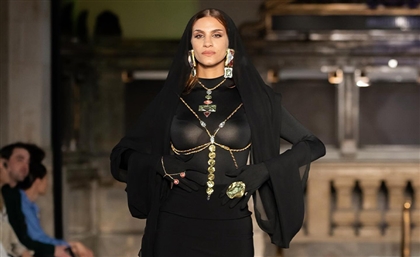
Inside Sheikha Moza’s Collection of Cartier’s Egyptian-Inspired Pieces
Sheikha Moza’s Cartier collection spans rare scarab brooches, a 1925 lotus flower bag and a turquoise Horus necklace.

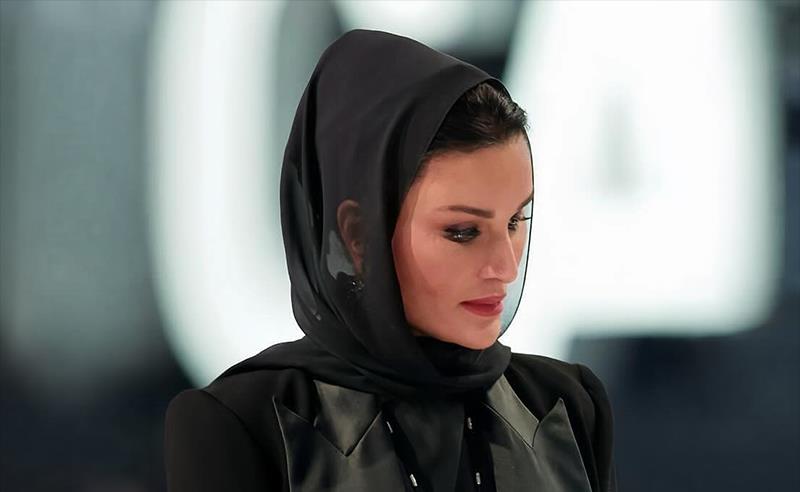
Sheikha Moza bint Nasser, the Qatari royal and chairperson of Qatar Foundation, has long incorporated distinctive Cartier pieces into her wardrobe, including a selection of jewellery and accessories drawing on the maison’s fascination with ancient Egypt.
From diamond-set scarab brooches worn on her turban to a lotus flower evening bag recreated from a 1925 Cartier design, her collection spans decades of Cartier craftsmanship and its enduring interpretation of Egyptian motifs.
Cartier’s fascination with ancient Egypt became particularly prominent during the Art Deco period following the discovery of Tutankhamun’s tomb in 1922. Scarabs, lotus flowers, hieroglyphic forms and other Egyptian references began appearing throughout the maison’s jewellery and objets, often reinterpreted through Cartier’s own decorative language rather than strict historical reproduction.
Cartier Scarab Brooches
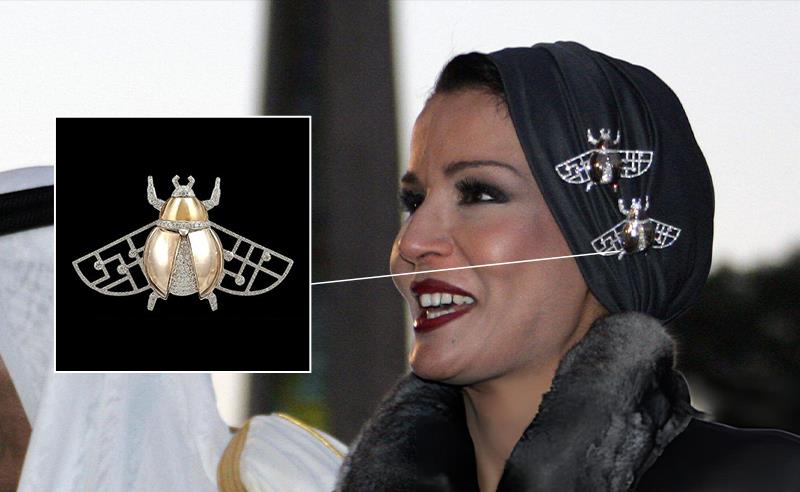
Rather than recreating a traditional scarab, Bäumer’s design gives the ancient motif a distinctly contemporary treatment, creating a dialogue between Egyptian symbolism and modern technology. The result is an intricate, almost mechanical interpretation of the insect.
Cartier produced only 30 examples of the design, placing it among the maison’s more limited contemporary creations.
Cartier Lotus Flowers Mesh Bag
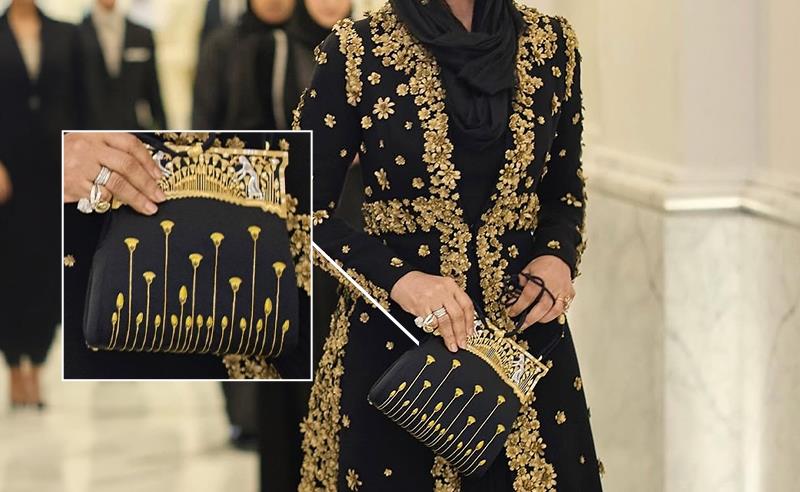
Sheikha Moza commissioned the bag from Cartier’s archives, recreating the historic design in silk, yellow gold and silver or white gold. The original design was later documented in Judy Rudoe’s Cartier, 1900–1939, published in 1997.
Cartier Four Sons of Horus Turquoise Scarab Necklace
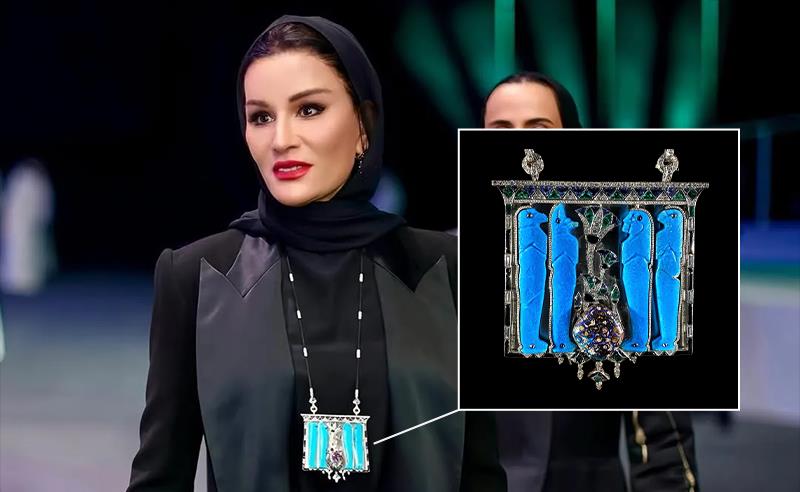
In ancient Egyptian belief, the four figures were associated with protecting the canopic jars used to preserve the organs of the deceased. Cartier translated the mythology into carved turquoise scarabs set against gold, turning an ancient Egyptian reference into a contemporary piece of high jewellery.
Sheikha Moza has owned the necklace since its creation and loaned it to Cartier’s Crystallization of Time exhibition in Tokyo in 2019, where it was displayed alongside pieces from the maison’s historic collection.