
Anissa Aida's Bridges Tunisian Craft & Japanese Minimalism
In conversation with Anissa Aida SceneStyled explores her influences, personal journey, and how her brand has changed in the last ten years.

Originally published on May 27th, 2026.
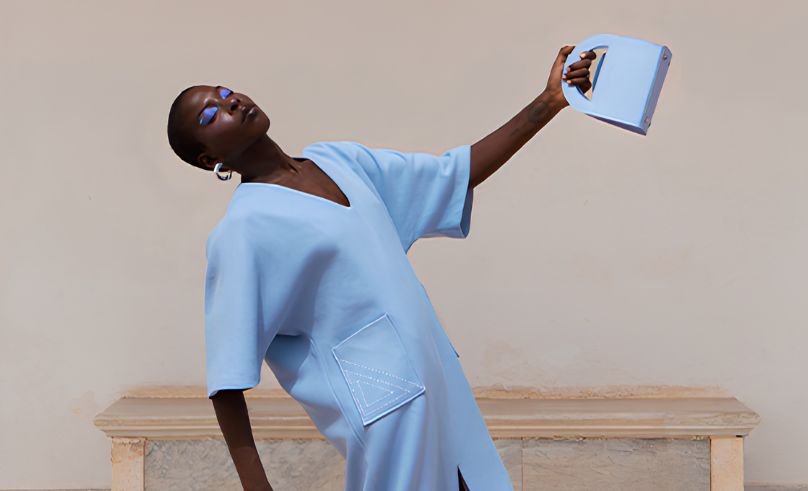
Anissa Aida’s brand emerged from a personal instinct that gradually evolved into a more mature, globally minded design language. As a child in Tunisia, she was “always doodling people wearing dresses and writing details about it,” imagining fabrics like “leather” and “wool” long before she had the formal vocabulary of fashion design. After moving to Paris at seven, fashion became less abstract. A visit to a runway show hosted by Inès de la Fressange sharpened that fascination into something more concrete. Watching the silhouettes and stories move down the runway, she realised: “this is something I want to do in the future.”
That sense of storytelling remains central to Anissa Aida’s brand, though it has evolved beyond personal aspiration into something broader and more geographically layered. The aesthetic is shaped through a dialogue between Tunisia, Paris, New York and Japan. While studying at Parsons School of Design in New York, she was exposed to international creative communities and, through classmates and internships, became increasingly interested in Japanese design philosophy. She describes Japanese aesthetics as “very avant-garde,” particularly in their approach to construction: garments with “less seams,” “more geometric” cuts and “more cocooning shapes.”-3d728b32-846c-47ee-b32b-a55ebca19898.jpg) Tunisia gives that design language its emotional and material grounding. Returning home allowed her to “dig into Tunisian sartorial culture” and study traditional garments such as the kaftan and the Tunisian jebba. What emerged was less a contrast between influences than an unexpected structural connection. She notes that North African patternmaking often mirrors aspects of Asian construction, with garments featuring “no cuts for armholes” and silhouettes that are “not fitted to the body,” but instead “more like cocoon-like.” The brand therefore does not simply layer Tunisian and Japanese references decoratively; it draws attention to the underlying similarities between the two traditions.
Tunisia gives that design language its emotional and material grounding. Returning home allowed her to “dig into Tunisian sartorial culture” and study traditional garments such as the kaftan and the Tunisian jebba. What emerged was less a contrast between influences than an unexpected structural connection. She notes that North African patternmaking often mirrors aspects of Asian construction, with garments featuring “no cuts for armholes” and silhouettes that are “not fitted to the body,” but instead “more like cocoon-like.” The brand therefore does not simply layer Tunisian and Japanese references decoratively; it draws attention to the underlying similarities between the two traditions.
Craft remains another defining element of the label. From her first capsule collection onward, Aida worked closely with Tunisian artisans specialising in silk weaving, leatherwork, linen and cotton weaving, millinery and embroidery. Her atelier and showroom in Tunisia reflect that production model, functioning as a space where fabrics, patternmaking, embroidery and finished garments exist alongside one another rather than as separate stages of production.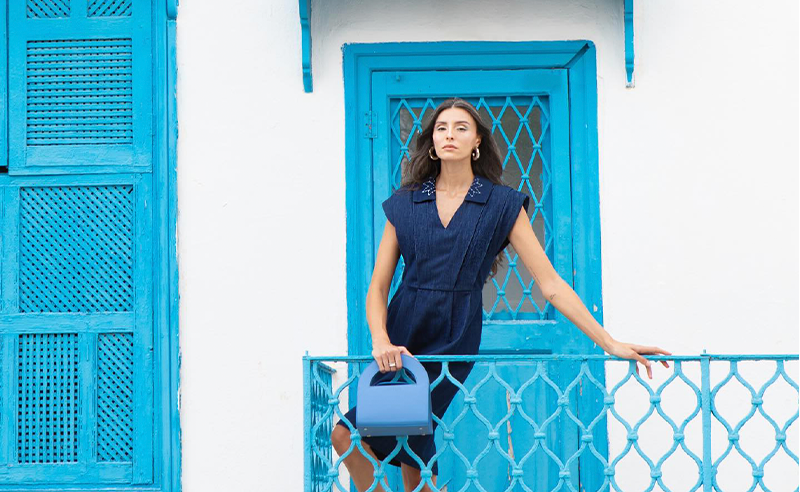 After ten years, she says, “I don’t think the aesthetic has changed so much.” Pieces such as the “Summer Day in Tunis jumpsuit” and the “Mandarin silk shirt” have remained part of the brand vocabulary since the beginning. What has changed, instead, is scale and precision: more artisans, more specialised techniques and a clearer articulation of the brand’s identity. It is, she says, “rooted in Tunisia, but with a global outreach,” with ambitions extending across Europe, the Middle East, the United States and Asia.
Ultimately, the brand functions as a form of cultural translation — balancing Tunisian craftsmanship, Japanese restraint and a slower, more flexible rhythm of production. What began with childhood sketches has evolved into a broader visual language that still remains anchored in Tunisia.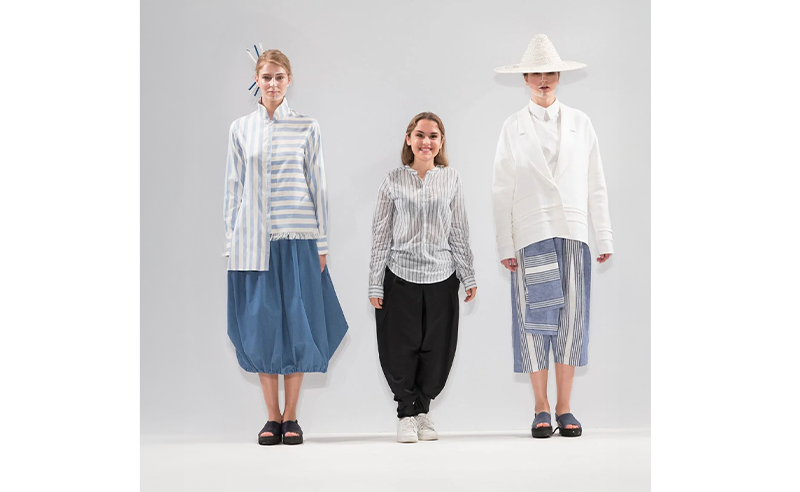
- Previous Article Monochrome Monday: Goji Berry
- Next Article Styled Archives: When MENA Stars Took the Edgier Route