Egypt's Maison Saedi Explores Parallel Universes Through Couture
This Maison Saedi collection is built around a single, destabilising question: what if?
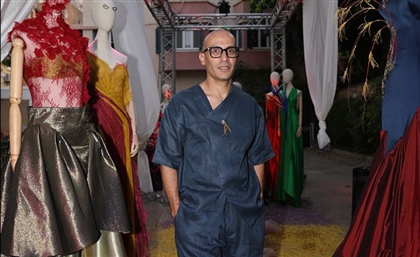
Couture, at its most potent, is autobiographical. It is rarely about surface-level showmans; it is about translating something internal into form. For Ahmed Saedi, every collection begins as an excavation of the self — a way to interrogate identity, memory, and the decisions that shape who we become.
His latest Maison Saedi couture collection is built around a single, destabilising question: what if?
“What if I had continued as an engineer?” Saedi reflects. Before fashion fully claimed him, engineering was not a distant possibility but a real path. That line of thought led him toward the theory of dark matter and parallel universes — the idea that every decision taken, and every decision avoided, generates another reality. Somewhere, hypothetically, there is a version of him who never entered fashion. Another who moved countries. Another who chose differently at every turning point.
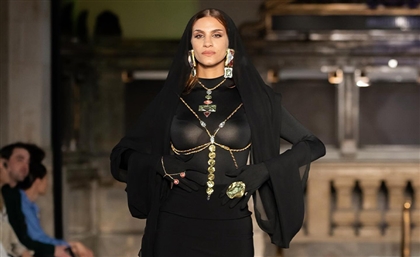
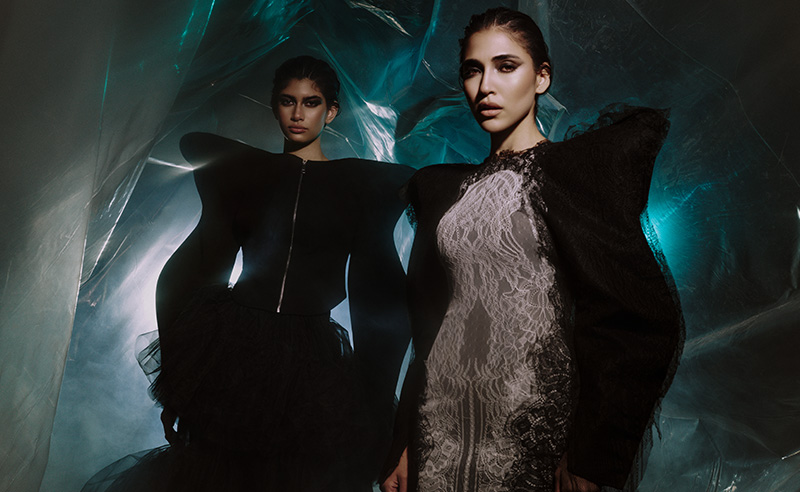
Rather than treat this as abstract philosophy, Saedi translated it directly into construction.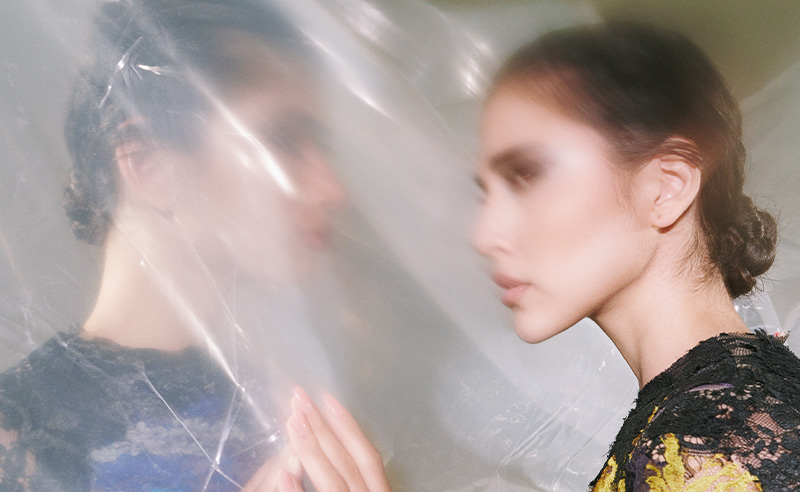 For nearly every design in the collection, he created multiple iterations of the same base silhouette. At first glance, they appear identical. On closer inspection, they diverge: a shift in colour palette, a change in textile, an alteration in structure or proportion. The essence remains constant, but the execution fractures. They are not replicas; they are parallel outcomes.
“When you see the three designs, you feel like they are the same, but they are not an exact copy,” Saedi explains. “They are similar in essence.”
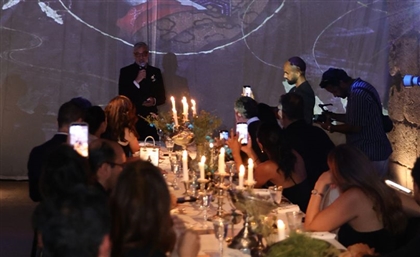
The presentation reinforced this conceptual tension. Shot inside a tunnel, garments were positioned in opposition — one inside, one outside, allowing each version to confront its counterpart visually. The staging functioned almost as a metaphorical wormhole, a spatial device that collapsed difference and proximity into the same frame.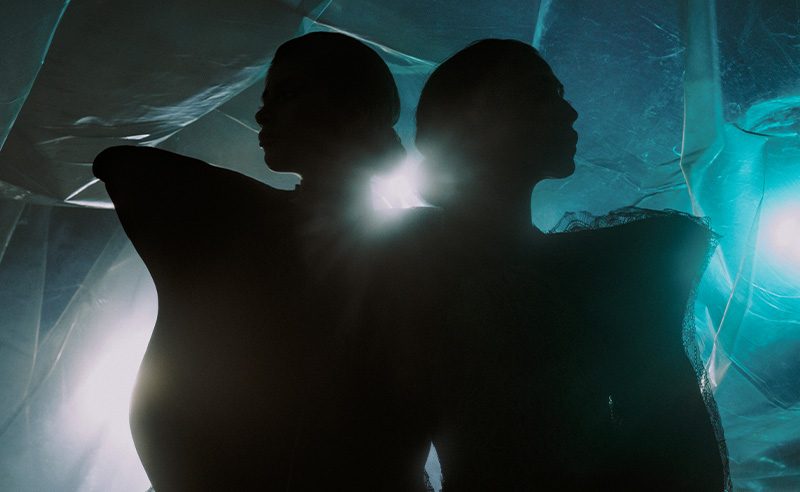 This methodology reflects Saedi’s design discipline. Concept precedes everything. Before sketches, before draping, before fabric sourcing, there is theory. Only once the conceptual framework is established do materials, colours, textures, and silhouettes enter the conversation. The garments are not aesthetic exercises; they are arguments in textile form.
Among the collection’s most technically demanding pieces are three dresses inspired by brain scans of a person living with bipolar disorder. Bipolar disorder is characterised by extremes: manic highs and depressive lows. These oscillations are not voluntary. In this context, the romantic notion of infinite parallel selves collides with a biological reality where control is compromised.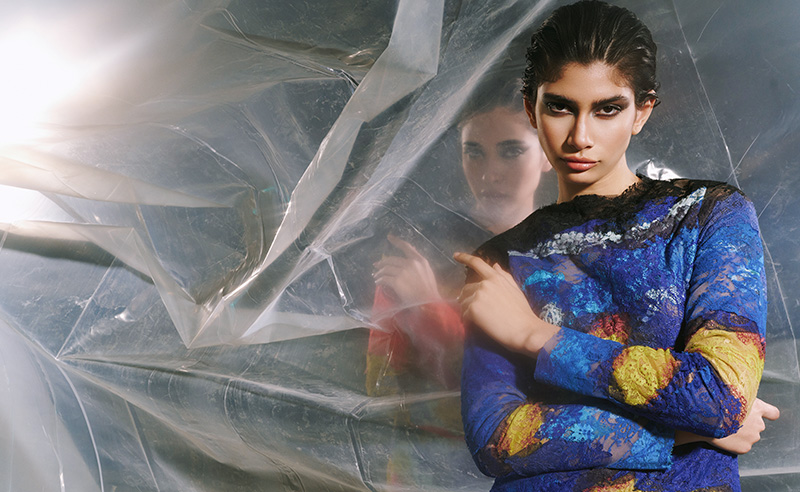 Technically, the execution rejected the obvious route. “It would have been easy to print the brain scan,” Saedi notes. “But that is not couture.” Instead, he deconstructed and rebuilt the imagery through fabric manipulation. Textiles were cut, layered, and reassembled to recreate the organic, almost electrical topography of neural scans. Translating something so intricate into a single cohesive gown — and ensuring it remained wearable — required significant structural problem-solving.
“The collection has to reflect our DNA. It has to come from a real personal experience and resonate. Our couture pieces are art pieces; they need a soul and a personality. They’re for people who dare to wear clothes attached to such emotions.”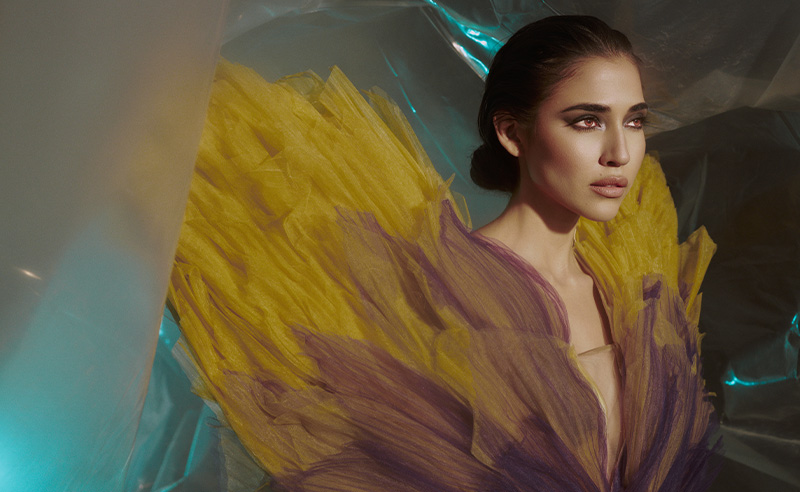 In a fashion landscape often driven by replication and speed, this collection proposes an alternative rhythm. It resists sameness by building multiplicity into its very structure. Every silhouette contains its own counterpoint. Every decision gestures toward another that might have been made.
Somewhere, in another universe, Ahmed Saedi may have remained an engineer. In this one, he constructs realities in silk, organza, and hand-cut fabric — mapping the architecture of choice across the body.
Photography: @abdallah.sabry_
Makeup: @bysara_adel
Hair: @sherifelmasry_hairstylist
Fabric partner: @Salemaltamoda
- Previous Article Palestinian Superstar Elyanna Fronts Coach’s SS26 Campaign
- Next Article Tunisian Actress Dorra Zarrouk Breaks Down Her Most Iconic Looks