Renaissance Renaissance S/S 26 Is About Rest and Staying Away from Men
Cynthia Merhej on Renaissance Renaissance S/S 26, rest as aspiration, and why the collection's most talked-about piece bans men.

Cynthia Merhej, the Beirut-based designer behind cult label Renaissance Renaissance, is describing the moment she realized what she wanted to make for Spring/Summer 2026. It wasn't a fabric or a silhouette that sparked the collection. "I was trying to remember what I used to love about fashion as a kid, and I loved the aspirational aspect of it," she explains. "But I realised at the moment all I was aspiring to was to get some rest."
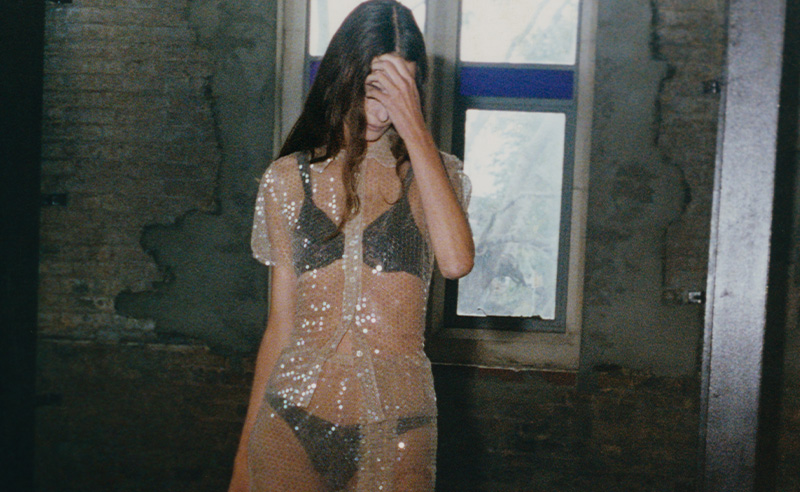
For anyone following the independent fashion circuit, this will sound familiar. Merhej had just completed two collections in a matter of months, a grueling schedule that left her depleted. Rather than push through to some imagined next level, she took a pause. And from that pause came La Touriste, a collection that trades ambition for intimacy, structure for softness, and movement for stillness.
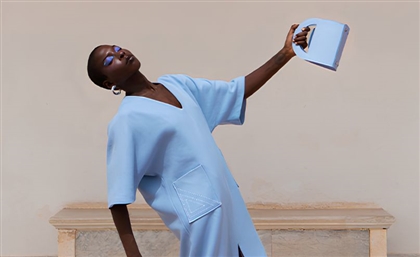
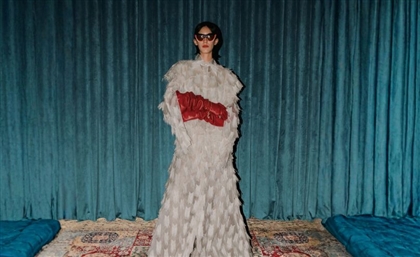
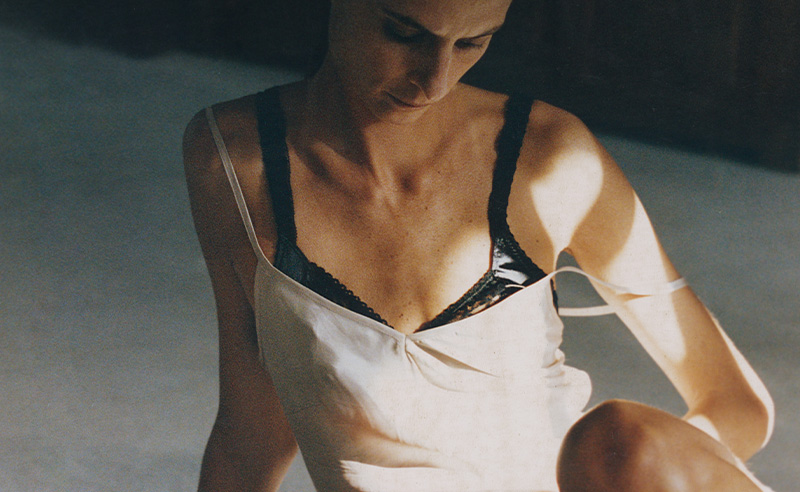
"I started exploring this idea of an internal world which was very meditative for me," Merhej says. The visual reference point she kept returning to was Tracey Emin's infamous My Bed, that unmade tangle of sheets and debris that scandalized and mesmerized the British art world in the late nineties. “You know that feeling of being in bed, crumpled sheets, light dappling on the white walls of the room, and softness."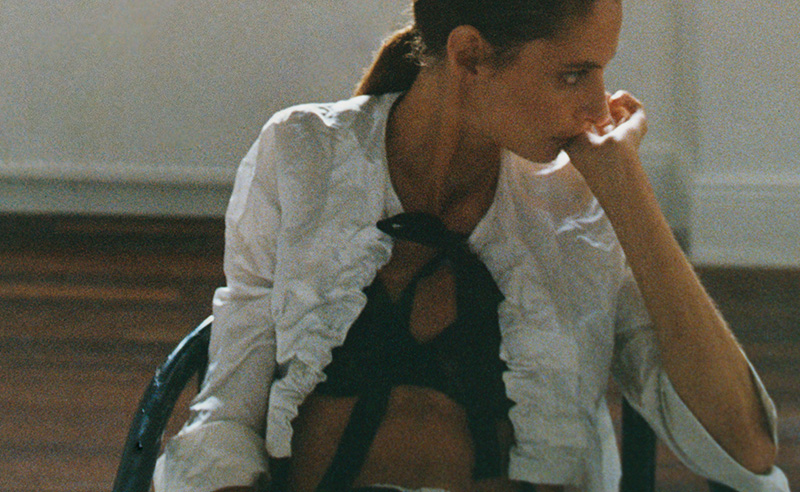 Translating that atmosphere into clothes meant rethinking everything. "I wanted to soften my silhouettes a lot and the fabrications too," Merhej explains. Jersey, sweatshirt fabric, washed denim - materials she had never used before- found their way into the lineup. Tailoring relaxed, waistbands became elastic. "Some play with crumpling of fabrics through playful movement of ties," she adds.
The woman Merhej imagined wearing these pieces is not rushing anywhere. "The wearer I was imagining was someone who was happy to be home alone for a long time," she says. "She is enjoying exploring an internal world as opposed to an external one."
This introspection also informed the design process itself; for La Touriste, Merhej abandoned sketching entirely. "I created a storyboard and very succinct script almost like a film," she says. "Then I collaged together all the different pieces in order to create drawings that were as technical as possible in order to start making the actual pieces and then just went straight into 3-D."
 One piece has already sparked conversation, a varsity tee bearing the phrase "Men Not Allowed," printed in both English and Arabic. Merhej isn't typically drawn to text in her designs, "I don't like anything that feels too graphic," she admits, " but sometimes words can be stronger than any visual. In this case specifically, I think a lot of people almost approached it like an image in the sense it was appropriated by different communities."
For Merhej, it speaks to a broader exhaustion with what's expected of women. "I think generally as women the expectations remain enormous, and we're still required to be a lot of things all the time and it can be exhausting to keep up," she says. "Making the time to be alone, to be in women-only spaces and queer spaces is in a way not engaging with the still dominant patriarchal structure gives us moments of healing and rest that we really need and deserve. I have to imagine it through a creative outlet."
Founded in 2016, the label carries a lineage that stretches back generations. Merhej's great-grandmother ran an atelier in Jaffa, Palestine; her mother built a practice in Beirut. "The word says it," Merhej notes. "Generation to generation, the whole point of it is to evolve because you're taking what has come before you and you have to now push it to a new territory. It's really great because you're not starting from nothing, you're starting from experience."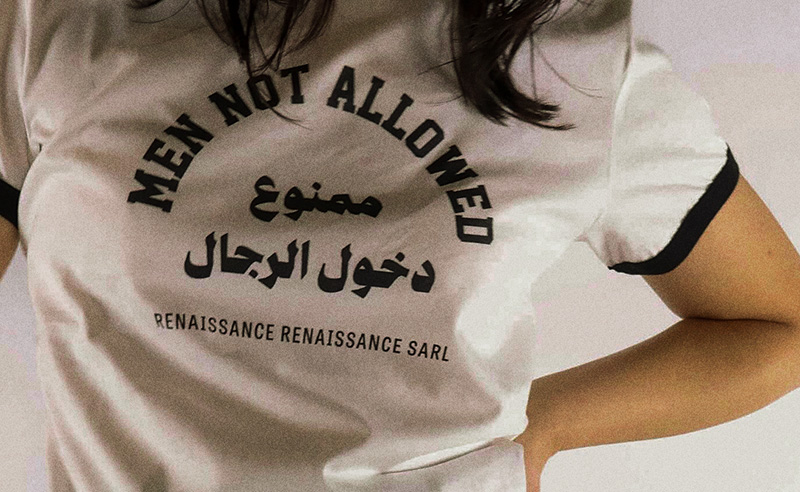 That experience has also included considerable hardship. Merhej has spoken openly about the challenges of producing collections in Beirut during Lebanon's overlapping crises; political upheaval, economic collapse, and the devastating 2020 port explosion. "Being from this side of the world has exposed me to a lot of culture and realities that I would otherwise never have been exposed to. A lot of it is extremely harsh," she says. "But it also taught me to see beauty in everything, it taught me a lot of lessons about enjoying life and about humanity. It toughened me up and it kept me soft."
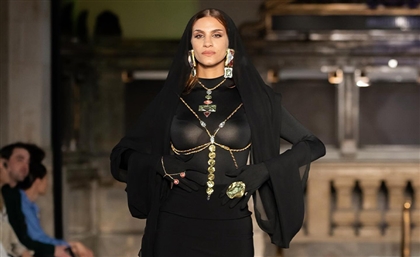
Renaissance Renaissance is known for romantic, feminine pieces: tulle, shirring, bows, but there's always an edge, a sense of construction underneath the softness. "For me personally, that's always been the luxury aspect of couture," Merhej explains. "It's comfort without compromising on a really strong design and a deep understanding of the body. So it's a philosophy that I'm always carrying with me in everything I design, whether it's sweatpants or an evening gown. Elegance comes when you have that comfort and ease in your own skin."
La Touriste was presented in Paris last October, but the production remains rooted in Beirut. "It's non-negotiable to me that we lose our connection to Beirut and that we don't work with artisans and producers in Beirut," she says. "It's non-negotiable to me that we don't make products that are well-crafted and designed. It's non-negotiable to me that we don't make work that moves people. I don't like doing anything half-half, even if that's really terrifying sometimes."
- Previous Article Monochrome Monday: Quartz Pink
- Next Article Tunisian Actress Dorra Zarrouk Breaks Down Her Most Iconic Looks