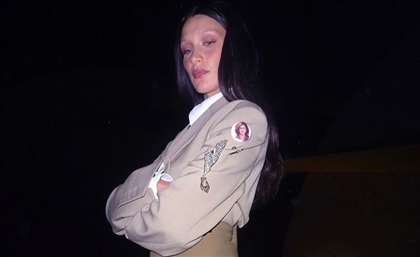
Kuwaiti Designer Bazza Alzouman on Modern Arab Romancewear
Kuwaiti designer Bazza Alzouman reflects on growing up as a third-culture kid, building a brand in a place with no established fashion industry, designing for women who look and live like her.

Originally published on January 28, 2026
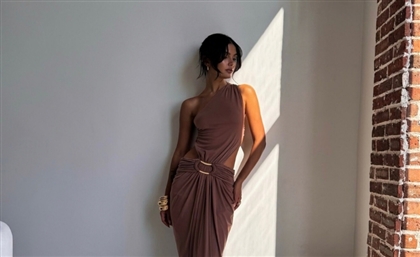
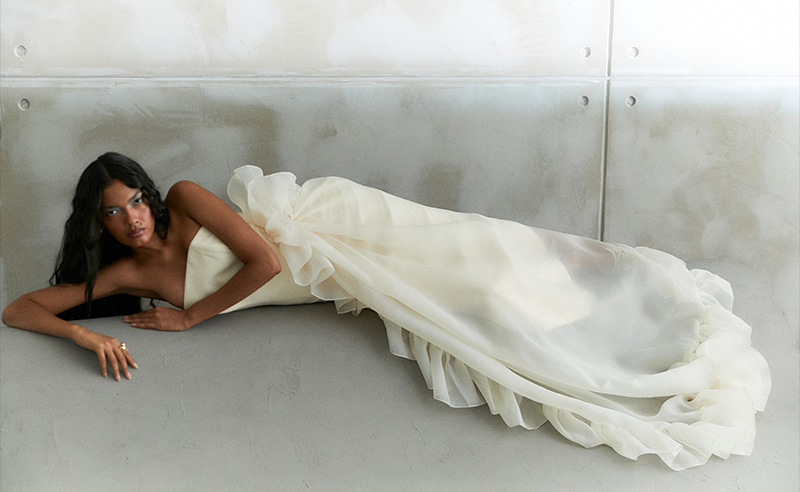
In a Gulf fashion landscape often associated with maximal bridal drama, Bazza Alzouman has carved out a more subtle space. Based in Kuwait, her eponymous label speaks to the “modern Arab woman”: someone who wants eveningwear that feels feminine, but still carries a sense of ease, modesty and a certain cool. Her gowns sit between couture and ready-to-wear, built on careful construction and a love of contrast – pastel tulle in concrete spaces, fine florals against rugged landscapes, romance punctuated with boots instead of crystal heels.
From her Kuwait City studio, where the showroom fronts a working atelier, Alzouman designs and produces everything in-house with a small team she’s trained to care about folds, frills, and placement as much as she does.
In this conversation, she reflects on growing up as a third-culture kid, building a brand in a place with no established fashion industry, designing for women who look and live like her, and why staying conservative in business may be the most radical thing she does.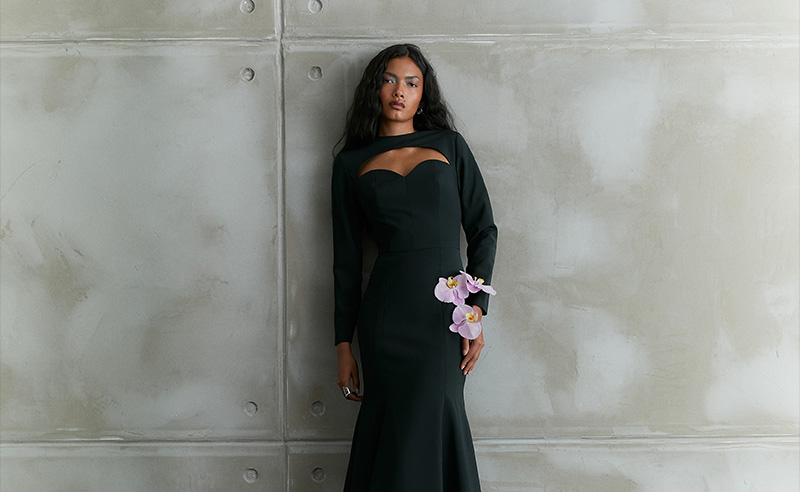 Q&A with Bazza Alzouman
Q: Can you tell me more about how the brand started and your international and multi-disciplinary background – especially going from Boston University, Parsons, and how all those roads led here?
Bazza Alzouman:
“I see myself as a third culture kid. My formative years were in the US, then I went back to Kuwait for a few years, and then returned to Boston for college. There was a certain stylistic identity that was formed that was neither here nor there. It wasn’t traditionally Middle Eastern and rooted opulence. But it also wasn’t traditionally US that leans more simplistic. I always had this interest in fashion that could blend the two.
I don’t believe that an education in fashion is imperative to become a designer – you can have the talent and all of that – but for me, I felt like I needed the technical knowledge and the basis to build on. So I went back and I got my associates from Parsons.
I always knew that I wanted to do eveningwear because it’s where I felt the magical feelings of clothing and femininity. Also at the time, it felt like there was a gap between things that were ultra conservative and very exposed eveningwear. As a modern Arab woman, we wanted something in between. Even if it was a female-only party, we still have a sense of modesty that continues with us. So I felt there was a strong need for a certain type of eveningwear that wasn’t overly expensive, that had the fun of fashion and those statement elements, while being a little bit more conservative. That’s kind of how it started.
There have been small tweaks since then, but I think I really know my customer because my customer is me, and the people that I’m surrounded with. I understand her. Sometimes I take issue with people who, when they look at designers from different regions, want you to solely use the craft from your heritage. While I absolutely love all of that, that’s not the only way to be a designer who represents where you’re from.
It’s who you really are, not who the West or other countries want you to be or want you to look like to consider you an Arab designer. We do everything from design to production in the country. We produce everything here. It’s not a very established fashion industry, so to me that’s enough to say: this is an Arab brand, a Kuwaiti brand.”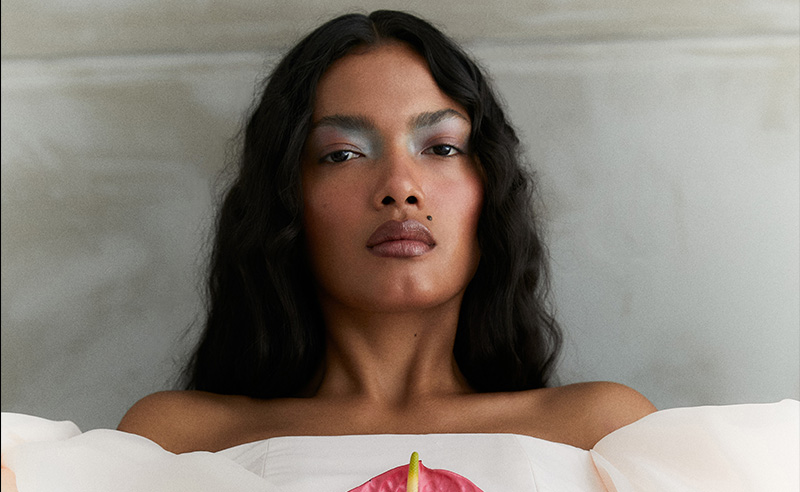 Q: You mentioned that there wasn’t really an established fashion industry to plug into. How did you go about creating your own supply system and production structure entirely in Kuwait?
Bazza Alzouman:
“You need to be realistic about what your environment and industry provide and where you can fit in. If you’re a creative person, it sometimes helps to have boundaries. Also when it’s not established, the world’s your oyster. You can make your own rules. As I looked at my limitations within the country – fabric supply chain, labor, etc – I shifted to where I am now.
I knew immediately I needed my own tailors since there were no real production facilities. You need your own people who are not looking at it as an hourly thing – who want to perfect the idea as much as you do, or are free to, because they’re not working minute to minute.
When we started to grow our team, we would bring them in and teach them our culture: where you put the draping matters. The number of folds in this thing matters. How many inches the frill is matters. That’s a culture we built into the company so they start to understand the importance of design, not just productivity.
Having your own production allows you to finish faster, decide whose dress you’re going to work on first, customize for your regional customers. If you’re with a factory in the Far East, if you make a mistake, it’s a hundred times that. And lead times make it tough to be flexible.”
Q: You mentioned your designs have shifted over time, and Kuwait itself has changed. How has this impacted you?
Bazza Alzouman:
“The main difference is that it’s more competitive, because now you have all these online platforms and online sales. There’s also more focus on the Arab woman and her purchasing power.
The way I mitigate that is by being really transparent and fair with what I offer, and continuing to always take feedback into consideration when developing design. It doesn’t have to be a negative effect, but it really tests the health of your business.
Things just get more and more challenging rather than less. You’ve just got to keep up. But if you really have your own identity, you know your customer, and you’re fair – because customers are smart – then you’re able to ride that wave out and maintain in different ways.” Q: Opening the store has clearly been a big milestone. Are there other recent wins or stepping stones for the brand that stand out to you?
Bazza Alzouman:
“We were part of Fashion Trust Arabia a couple of years ago and were recently invited to be part of Qatar Creates. They did a retrospective on the Fashion Trust Arabia competition and displayed three of our gowns. I felt like that was such a beautiful experience and honor. For the brand to be represented there – to represent me as a designer, Kuwait, Arabs in general – is a really beautiful win.
More generally, I’m never surprised when I hear about the challenges of bigger fashion houses or smaller ones. It’s a very challenging environment. Being able to continue to do this is, in itself, something I’m really grateful for.”
Q: There’s a clear love of exhibition spaces and raw environments – moss in a gallery, a dress on the beach, concrete floors with very refined gowns. How does that contrast feed into your work?
Bazza Alzouman:
“I definitely feel like my work is always about a balance of contrasts – masculine and feminine, romantic and practical, girly and ‘boss girl’. I’m always trying to find this perfect mix of conservative but still a little bit attractive, sexy. Women want to feel beautiful.
Sometimes the rawness of a space can balance out the femininity of a gown. Gowns tend to be styled in a very feminine, opulent way. Sometimes I need a cool-girl element. So we’ll do a shoot with boots, very minimal makeup, undone hair, concrete floors. Even when I select the team I want to work on shoots, I try to choose people who will bring a sense of edginess to the looks, because it makes it cooler and more modern.
Styling and direction and using these inspirations help communicate what we represent and what we’re trying to do. It’s not about needing to look perfect and beautiful. We want you to look good, but we’re also embracing the flaws and owning who you are.”-2cd85636-7a1e-4242-932d-5cd967c2d770.jpg) Q: Any advice to share with aspiring designers?
Q: Any advice to share with aspiring designers?
Bazza Alzouman:
“I’d encourage people to be conservative in the way you run the business. I mean conservative in your growth, your spending, your planning. Taking calculated risks. No ‘go big or go home’. I like stability, consistency.
If there is a relationship I’m going to form with a retailer or a service provider, I try to make sure it’s something sustainable for me that I’ll be able to commit to long term. Consistency and commitment is something I deeply value.
Q: Finally, do you have any upcoming collections or projects you’re excited about?
Bazza Alzouman:
“We recently released pre-Spring ‘26. It’s inspired by Norway: the mountains, that sort of hard stone architecture, and then the tiny little florals. I love the contrast found in the landscape. We have our pastels and then we have these things that look like flowers attached. So it’s like the mountains: both angular and feminine. I’m so excited about it.”
- Previous Article SELECTS: Iraqi Designer Diana Al Shammari Styles Her Jerseys
- Next Article Monochrome Monday: The Daphne Blue Edition