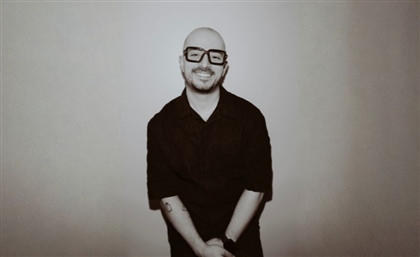
Talata Mazbūt Is Not a Fashion Brand. It Just Happens to Make Suits.
In conversation with founder Duaij El Amin on how a suit becomes counter-propaganda and refusal against fashion's endless trend cycles.

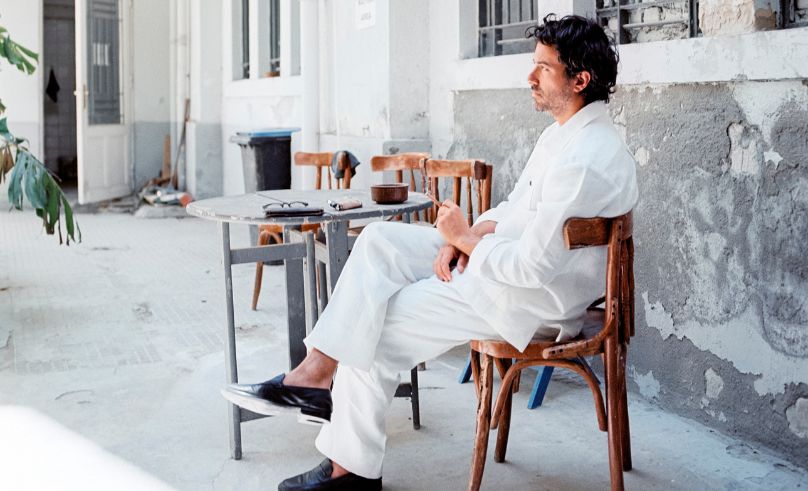
I ask founder Duaij El Amin the question everyone asks first – what is talata mazbūt? El Amin hears “brand” and winces, like you’ve just called a suit a “t-shirt.”
A Lebanese-Syrian who grew up in the Gulf, studied economic policy, worked in kitchens, writes poetry – and has now opened what he calls his “institution” – El Amin isn’t interested in linear life paths or easy answers. talata mazbūt was formed in Egypt after years in London, where he grew increasingly disillusioned with the social norms, rigid structures, and (seemingly) subtle coercions that govern everyday life. What passed as freedom there felt procedural, administered, and hollow. In responding to what he sees as a neoliberal capitalist agenda – one that trains desire, codifies taste, and mistakes choice for agency – talata mazbūt was born.
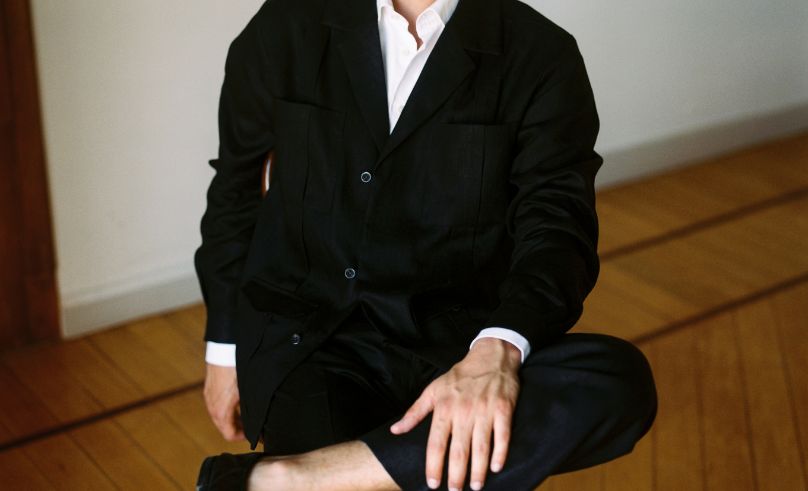
When you speak to its founder, you realize quickly that fashion is almost incidental here – a delivery system rather than the destination. Aesthetics, in his hands, is merely a starting point used to interrogate the systems we move through: freedom, propaganda, and the ways fashion teaches us what we want. 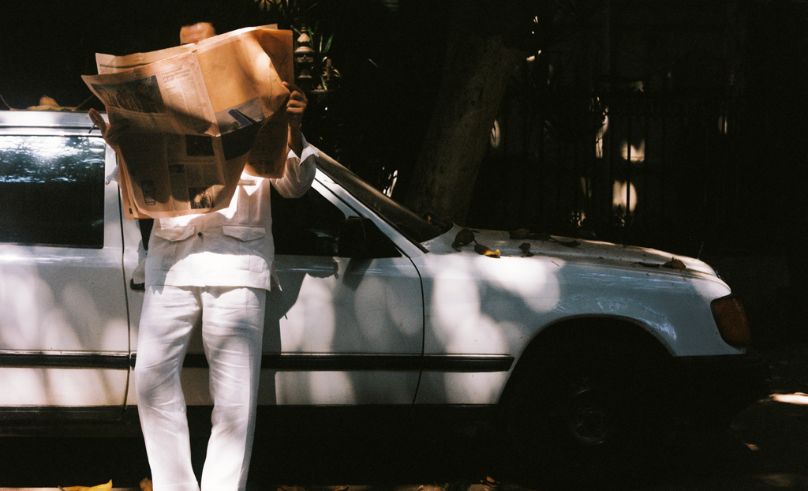 At first glance, talata mazbūt appears to be a menswear project centred around a single silhouette: takm mazbūt. It’s a suit you’ve seen before in grandparents’ albums and in film stills from the ‘60s, often referred to as the “safari suit,” a colonial misnaming that framed a warm-climate suit through an imperial lens.
What grounds all of this philosophy in the real world is the way talata mazbūt is made. Each suit is produced one at a time, made to order in an atelier environment that privileges pace over volume. At most, one suit leaves the atelier per day. Talata mazbūt operates like a refusal: fewer garments and a belief that restraint in fashion can leave room for more freedom elsewhere.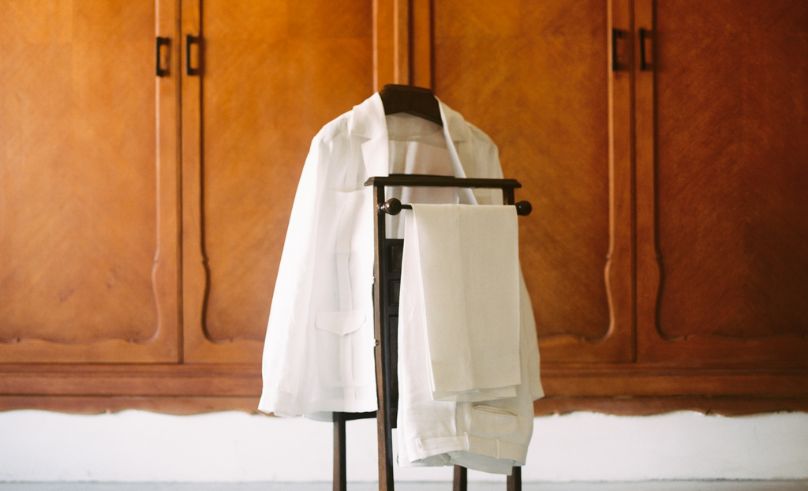 And so instead of asking where the brand came from, it made more sense to ask what it’s pushing against. What follows is our conversation.
How would you define fashion?
Beyond the basic requirement for dignity through clothing (a requirement fashion has made apparently negotiable, with all the forced nakedness), fashion becomes a need for self-expression. Not in a survival sense, but in the sense that symbolism shapes us.
Why was Egypt your calling card for freedom?
I moved here first and then realised I had more freedom than I had in London.
Everyday life felt less monitored, less rigid, more negotiated. The lines on the road are suggestions, a three-lane road becomes four in traffic and no one panics. People adjust. We’re not expected to behave like sheep following a diagram.
There are cases in your day where you come across a person acting in a certain way and it is completely acceptable to administer a punch. But if you do that in London, the law is black and white.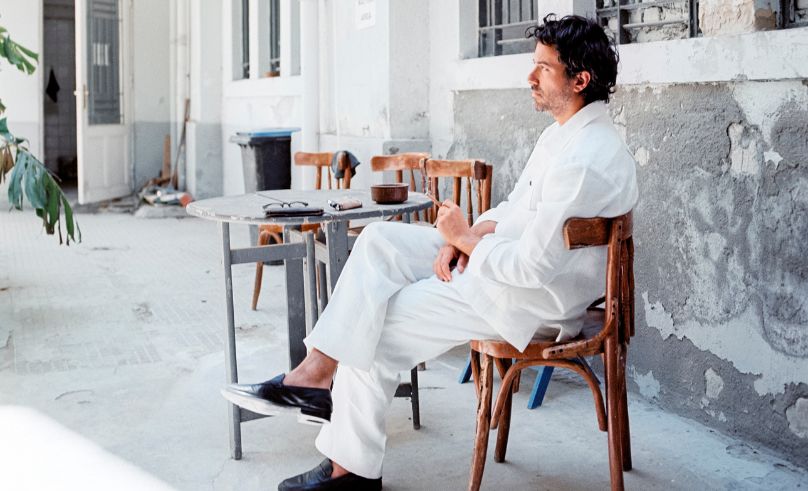 Human discretion is rare in London, you can’t even get away with a free ketchup sachet. Everything is rigid. It got to a point where I genuinely preferred dealing with automated systems, at least the robot did not pretend to have agency.
In London, I found freedom to exist in name. Here, things are looser, less rehearsed, more negotiated. And within that looseness, I found space and the kind of freedom I personally need.
What is Fashion’s biggest propaganda?
That it can define good taste and luxury. And that submitting to its definitions will make you happier or appear more tasteful and therefore earn more respect and more importance. It’s a neat equation and a very profitable one. Especially when those definitions are designed to change routinely while we continue to blow with its wind.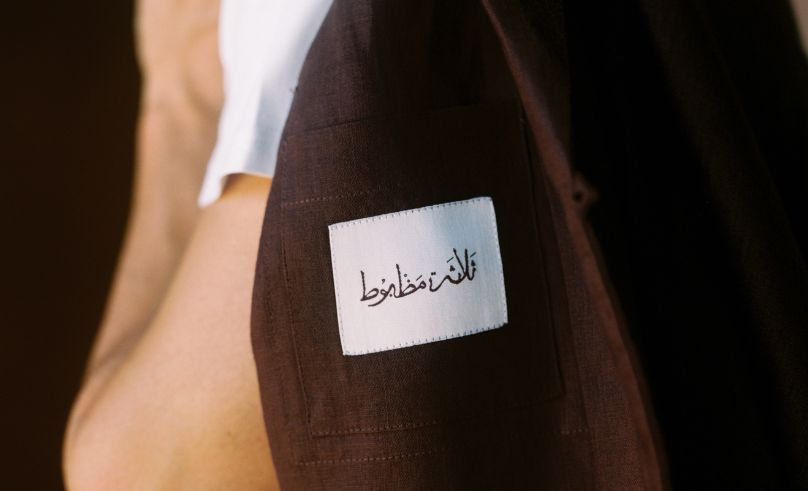 Is talata mazbūt a form of propaganda?
Absolutely. We do not shy from it.
I believe life within yourself internally is limitless. And its material expressions by the laws of physics that are limited.
We're pushed to express ourselves in as many different ways as we can to look cool and different. And they want us to copy people that have the privilege of implementing that image perfectly. But when that translates to someone that does not have the finances or the fashion sense, you look into most people's closets and they're schizophrenic.
What we are trying to sell, at the very least, is an idea we believe is beneficial: fewer choices, more repetition, less noise. Not as resistance but as relief.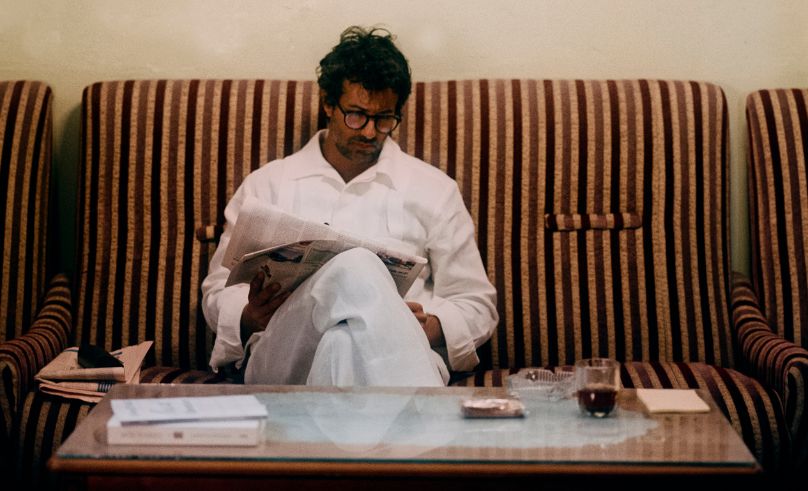 Define good taste.
A lot of restraint, discipline, routine. The fun in all of that is inside.
I can tell you what's bad taste. Taking the pattern of the keffiyeh - where it belongs - and transplanting it onto unrelated clothing items. Some will say this is a form of resistance. If we’ve never heard you speak out and you suddenly appear in it for “fashion,” that’s the kind of bullshit I’m talking about. If you’re using it to sell your brand, that’s another layer of bullshit. And another layer still is adding a sense of “glamour” to it.
I don’t believe even Anna Wintour can define it. She administers it well because of her polished lens. But administration is not authorship. Taste exists first among people. Institutions only codify it.
The algorithm doesn’t only respond to desire, it increasingly manufactures it. When this happens, human agency shifts. We stop shaping taste and begin reacting to the world as it is presented to us again. Fed, looped, and amplified back. So if I had to define good taste today, under these conditions, it would be restraint, discipline against noise, and repetition. Not because this is eternally correct but because we require a protectionist phase.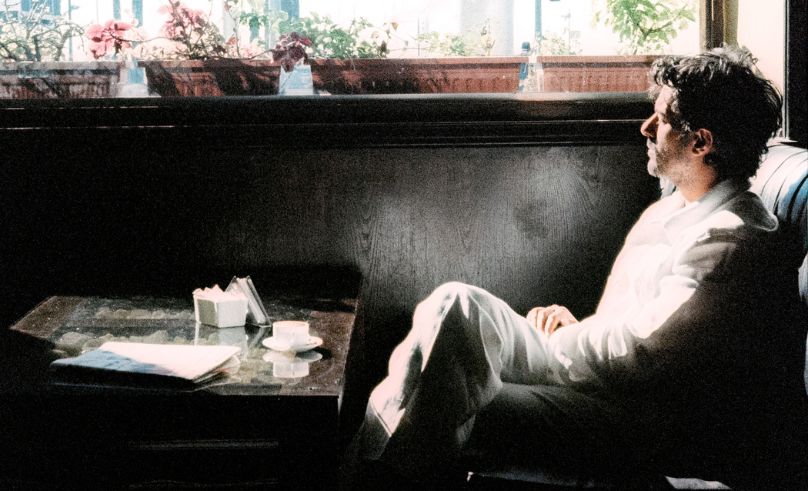 Why skip the classic fashion campaign?
A classic fashion campaign would have flattened the gesture too early, reducing it to image, season, and release. It allowed us to establish a rhythm rather than announce a product.
When nostalgia is the reference, how do you avoid costume and clichés?
By not trying to be cool and clever.
We are selling a costume. It may not have been traditional in the folkloric sense but it was part of urban tradition. And with time, especially when placed against what currently surrounds us, it may very well become traditional in the sartorial sense.
Why is Price Point the Pushback?
Something made in Egypt can, shockingly, cost this much, yes. It’s imported pure Italian linen with local Egyptian craftsmanship. Conveniently, the two things many people claim to be fascinated with and knowledgeable of.
Hearing that dreadful question, “this much for a local brand?” from people dressed head to toe in European brands with completely unjustified multipliers baked into their prices. That’s not a natural reaction, that’s long-trained conditioning.
 What’s the big dream?
I want this to spread across the Arab world.
Takm mazbūt, as a concept and not just by us, embraced again by Arab men from Morocco to Baghdad. Choice is framed as freedom and I’m not convinced the relationship is that clean. Consistency in this context may be less a limitation than a form of relief.
Naguib Mahfouz, a man no one would accuse of having a narrow inner world, appeared again and again in the same takm mazbūt. David Lynch ate the same lunch every day for years. Jack Kerouac lived wildly on the page yet dressed with almost monk-like restraint. In all cases, structure on the outside created freedom on the inside. Repetition wasn’t a constraint it was the condition that allowed interior words to expand.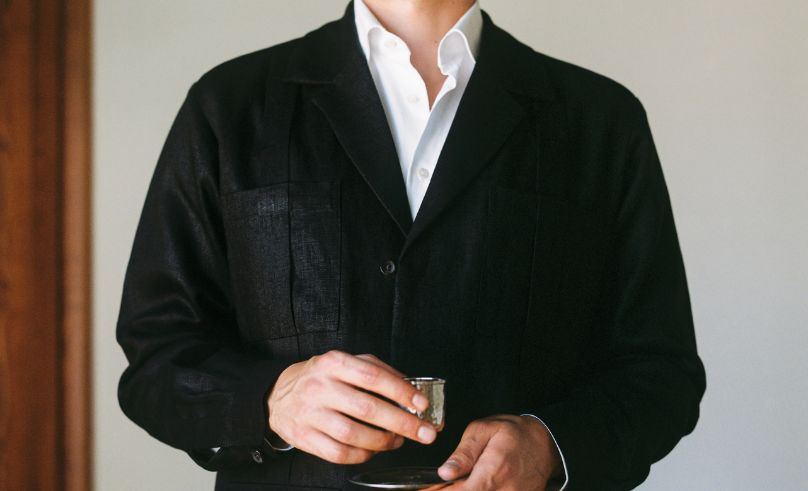 There is no Fall/Winter 2026 and Spring/Summer 2027, no countdowns, it doesn’t expire. It is simply there, and most local tailors would be glad to make one for you, it doesn’t have to be from us. You can find it in an old family album. Take a photograph of your grandfather wearing one and show it to a local tailor, I bet they’ll recognise it instantly just don’t call it “safari” please.
- Previous Article Monochrome Monday: The Daphne Blue Edition
- Next Article Tunisian Actress Dorra Zarrouk Breaks Down Her Most Iconic Looks