Special Request Stages Its Evolving World in Copenhagen Showroom
From August 3rd to 7th, Egyptian-German fashion project Special Request will bring 'Intervals I–IV' under one roof in an immersive Copenhagen showroom.
Founded by Egyptian designer Ahmed Tohamy and based in Berlin, independent project Special Request resists the pressure to produce in line with the fashion calendar.
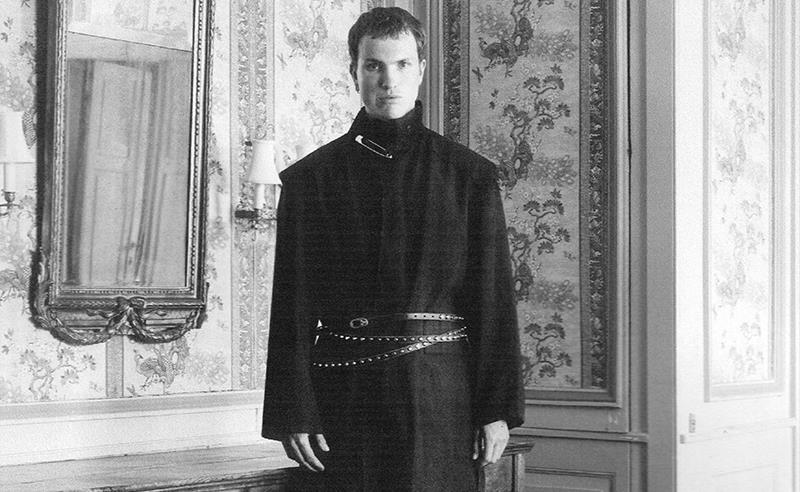
Instead, the brand unfolds through what Tohamy calls Intervals, evolving bodies of work released only when they feel complete. Through avant-garde experimentation, deadstock leather, Egyptian linen and custom metal hardware are worked into limited-edition and one-of-one designs, often in collaboration with specialist craftspeople. Even the language around the pieces is reconsidered. Accessories become objects. Clothes become garments. The shift is subtle but deliberate: a way of moving each piece away from the logic of trend and closer to something that evolves with you.
From August 3rd to 7th, Special Request will bring all of its objects under one roof for the very first time. At Adelgade 106 in Copenhagen, garments and objects from Intervals I–IV will sit alongside music, new imagery, and Time Matters Not — Entry I, the first chapter of Special Request’s visual diary. On August 5, a live tattoo performance by Sebastian Guldager will add another layer to an environment designed to be felt, heard, and experienced.
Ahead of the showroom’s opening, SceneStyled spoke with Tohamy about bringing the first four Intervals into dialogue, building a space that extends beyond the clothes, and why Special Request continues to move at its own pace.
-d355a820-d6a0-4633-aa8c-9152e113bfaa.png)
Q: Visitors will experience all four Intervals together in the showroom. Looking back, how do you see the series evolving from one chapter to the next?
A: Each Interval has been about unfolding the manifesto behind Special Request rather than following a seasonal structure. With every chapter we’ve become more comfortable pushing materials further, revisiting ideas through different iterations, and allowing experimentation to guide the process instead of chasing finished perfection.
The project has also grown emotionally. It has gradually taken up more space in my life and become something that feels increasingly real through every decision, every object, every conversation, and every person it reaches. Each Interval reflects where we were at that particular moment, and together they document that growth.
Q: Throughout the development of the Intervals, were there any unexpected discoveries or happy accidents that ended up shaping the final outcome?
A: Unexpected discoveries happen with almost every single garment, and they’re probably the part of the process we embrace the most. We intentionally leave room for accidents, imperfections, and material behaviour because they often reveal something we couldn’t have designed beforehand. Those moments have become part of the language of Special Request. They reinforce the importance of craftsmanship and the human hand while always staying within the values of the project.
Q: Interval IV is being unveiled for the first time. What new materials, ideas, or creative questions does this chapter explore?
A: With Interval IV, we continued exploring Egyptian linen and pushed it much further through layering, construction and different treatments. Rather than introducing completely new materials, the focus was on understanding familiar ones more deeply and asking how far they could be taken without losing their character.
Q: Is there a particular piece that you feel best embodies the spirit of Interval IV?
If I had to choose one piece, it would probably be the Vestige Leather Jacket. It has a hidden logo that only appears through movement, when the wearer stretches their arms forward. I like that it doesn’t announce itself immediately. It reflects the way Special Request approaches identity: quietly, without relying on obvious branding.
I’m also especially proud of the Heavy Metal Belt and the Forged Key Belt. We handcrafted the hardware ourselves in the workshop, and that process taught us a great deal. They represent how much we’ve grown in terms of making things with our own hands rather than simply designing them.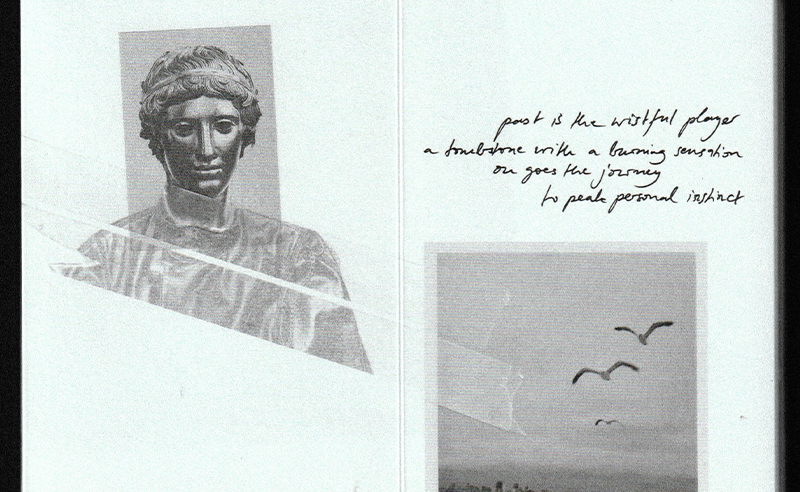 Q: Music plays a critical role in your design ethos; were there particular artists or songs that accompanied your process to the making of Interval IV?
A: I listened to a lot of Mogwai while working on Interval IV, especially 'Come On Die Young' (1999) and 'Rock Action' (2001). Those records create a particular emotional atmosphere that helped shape long hours in the studio. They carry a sense of tension and quietness at the same time, which resonates with the way I approach making things.
Q: Can you tell me more about the making of the visual diary Time Matters Not? How does the written component complement the material world of Special Request?
A: Time Matters Not is a visual diary that brings together images, poetry, personal notes and references collected throughout the development of Special Request. It wasn’t conceived as a catalogue or a publication explaining the work, but as another object within the project.
Writing allows me to express ideas that materials alone cannot. Sometimes a garment communicates something physical, while a short text captures the emotion or thought behind it. Together they create a more complete picture. I wanted the publication to feel intimate, almost like finding someone’s notebook, and to offer another way of entering the world of Special Request.
Q: You're presenting in Copenhagen this time. How does it feel to bring the showroom here, and how does the energy of Copenhagen compare with your previous presentations in Berlin?
A: It feels very special to bring the showroom to Copenhagen. I lived here for a period of my life, I have many close friends here, and over the years Special Request has naturally found an audience in the city. In many ways, it feels like an intimate celebration of that relationship.
More than anything, I’m excited to finally give people here a physical space to experience the project firsthand. Until now, most encounters have happened online or through individual events, so being able to present all four Intervals together, talk to visitors, and let them spend time with the work feels very meaningful.
Berlin will always be home for Special Request because that’s where the project was born. Copenhagen, however, has a different energy. It feels slower, more intimate, and people tend to spend time looking closely at things. That makes it a very natural place for this presentation.