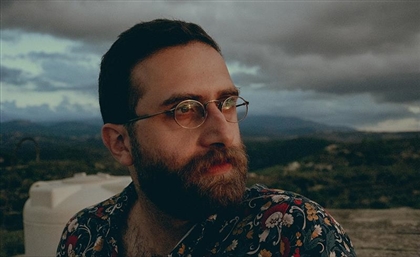
Lebanese Photographer Habib Saleh on Finding Meaning in the Everyday
Lebanese photographer Habib Saleh on why a garment only matters for what it makes you feel, what perfume advertising taught him about images, and the app he built out of his own colour palette.
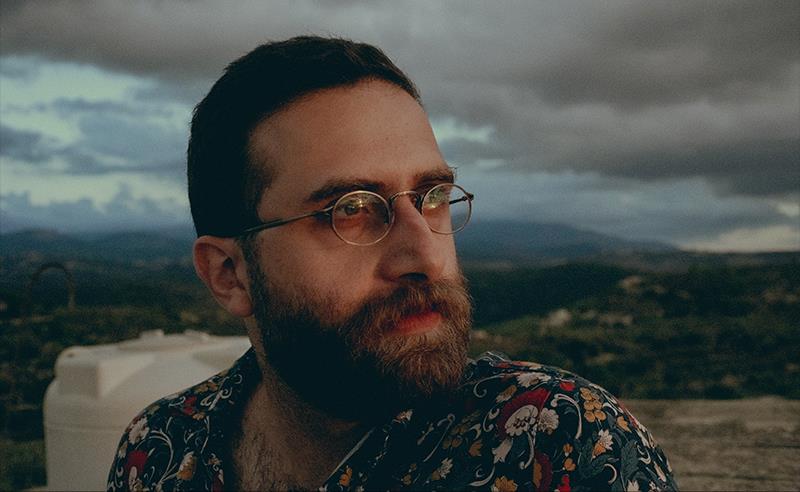
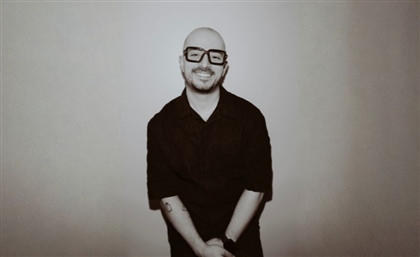
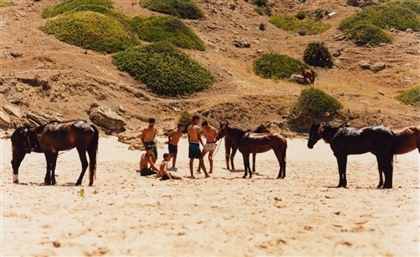
Photographer Habib Saleh was born and raised in Joun, Lebanon, where he still lives today. His career began in portrait photography, starting with just his friends, before eventually moving into fashion. In recent years, Saleh began contemplating his life in new ways, leading him to document his daily life in his photography series 'To Pray Is to Wander About the Meaning of Life', which he is currently developing into a photobook.
He prefers not to centre his work on extraordinary events. His photographs turn to his immediate surroundings, depicting the delicate nuances of gestures, relationships and atmospheres that reveal, as Saleh describes, how "the ordinary begins to resist its own familiarity."
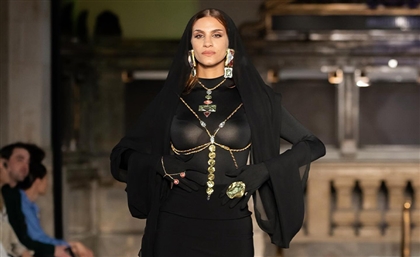
"When I began doing photography and everything related to visuals, it started as fashion, fashion and portraits," Saleh explains. "I only started doing documentary work about four years ago. The documentary work is all one body of work. I don't separate them. I don't see them through just one lens."-87c962a1-81a3-4cd7-9db1-1cf25eff108d.png) This is an approach he also takes through his work in fashion, with a certain continuity in theme regardless of the brand or nature of the project. Although he of course makes changes and adapts to his clients, he is aware his approach can mean he does not garner as much commercial work. This isn't something he is particularly fazed by, preferring to avoid what he sees as the superficial trajectory Lebanon is moving towards. "I'm always changing, maturing, it depends on how I feel," he says. "And sometimes this is not good commercially, because maybe it's not trendy."
This is an approach he also takes through his work in fashion, with a certain continuity in theme regardless of the brand or nature of the project. Although he of course makes changes and adapts to his clients, he is aware his approach can mean he does not garner as much commercial work. This isn't something he is particularly fazed by, preferring to avoid what he sees as the superficial trajectory Lebanon is moving towards. "I'm always changing, maturing, it depends on how I feel," he says. "And sometimes this is not good commercially, because maybe it's not trendy."
Saleh describes Beirut as a city where there is a constant pressure to produce, in fashion and in other areas, to the detriment of the culture. "In Beirut, we like for things to keep happening all the time, to an extent that it becomes a pseudo thing," he says. "Because there isn't much going on, so we just try to slap anything on anything." He believes this stems from the aftermath of war, the economic crisis and an increasingly constrained creative market, where there is pressure to keep producing regardless of whether there is anything meaningful to say.
"There's something valuable in telling a story in fashion photography," he says. "In my work there's something that holds everything together in the photo, outside of just the clothes." For Saleh, fashion is ultimately about feeling. A garment might be beautiful, but its significance comes from what it evokes in the person wearing it. "You can open your wardrobe and maybe you have the most beautiful dresses in the world, but one of them makes you feel something and you always come back to it," he says. "Maybe it's even the cheapest one between them."
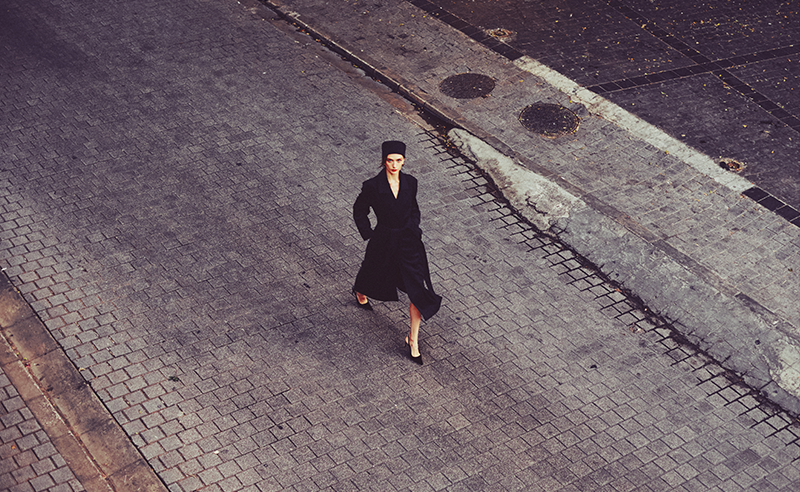 He believes there are things to be learnt from perfume advertising, where the image has to communicate something that cannot actually be experienced sensorially in the moment. "I love perfume ads, because you cannot smell it yet, so they have to kind of get you somewhere with your mind to imagine what this perfume smells like," he says. "It's very abstract usually."
He believes fashion photography should work in a similar way, that the image should create a feeling around it, allowing the viewer to imagine something beyond what is immediately visible. "I think that fashion should have this touch, even to the things that the eye can see," he says. "Because I think the beauty of the pieces is hidden in what they make you feel."
For Saleh, it's the power of the imagination that allows fashion photography to retain its artistic weight, rather than becoming something to scroll past and immediately forget. He looks back at fashion photography from the 1940s, 1950s and 1960s, pointing to an era when fashion shoots would take place in old souks in historic cities such as Cairo, where photos provided a narrative, with the clothes becoming part of a larger context.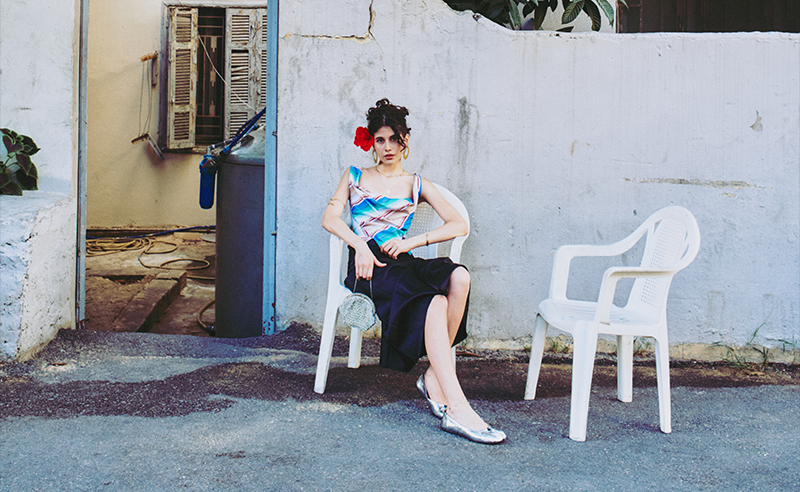 "It's nice when you mix it, like, when you mix the clothes with the culture," he says. He feels that this relationship can become forced today, particularly in Beirut, where brands may deliberately seek recognisably Lebanese settings to appeal to audiences living abroad. For Saleh, simply placing a model in an old barbershop or another recognisably local setting does not automatically make an image culturally meaningful.
Saleh's movement towards documentary work came as the circumstances in his life changed dramatically. The Beirut port explosion of August 4 2020 destroyed his home and studio, and he feels lucky to have survived. He left the city, living abroad briefly before eventually returning to Joun.
Although the explosion changed the course of his life, Saleh resists the idea that a single event should determine every shift in how we perceive life and ourselves. "I don't want an event to shape everything. I like facts. I don't mind facts. They are facts about me and my life, but I don't want a fact to shape the whole thing," he tells SceneStyled.
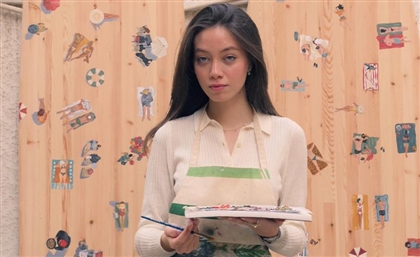
-a235e03f-f376-4ef3-acd1-285bd3b1b3d3.png) It was a moment that also coincided with personal life transitions, pushing him towards an inward turn and encouraging him to look more closely at his day-to-day. "There was a transitional phase in my life. I was changing on a personal level," he explains. "So I transitioned slowly to something more about taking photos of my daily life, trying to get to know myself more through my surroundings."
It was a moment that also coincided with personal life transitions, pushing him towards an inward turn and encouraging him to look more closely at his day-to-day. "There was a transitional phase in my life. I was changing on a personal level," he explains. "So I transitioned slowly to something more about taking photos of my daily life, trying to get to know myself more through my surroundings."
He is currently working on a photobook, a publication of his entire web documentary series 'To Pray Is to Wander About the Meaning of Life', which captures these reflective moments as a way of making sense of his own experience. "For me, this is the closest I've felt to praying, when I was doing this, taking pictures, writing, thinking."
His documentary practice often circles around themes of home, memory and family, with his hometown Joun shown throughout the photographs. "These are my roots, without romanticising it, but they are something, they played a big part of my life," he continues. "Me here now talking to you is what grew from all these years and all these experiences."
The series starts in a moment of contemplation, opening with the statement 'there are moments when the world seems to withdraw from its own noise, and something quietly begins to appear.' Talking to SceneStyled, he reflects on ordinary instances, such as looking at ourselves in the mirror, how we see only the person we are in that moment, rather than consciously comparing that reflection with how we looked years earlier. It is only when we encounter a photograph from the past that we are reminded of how we once looked.
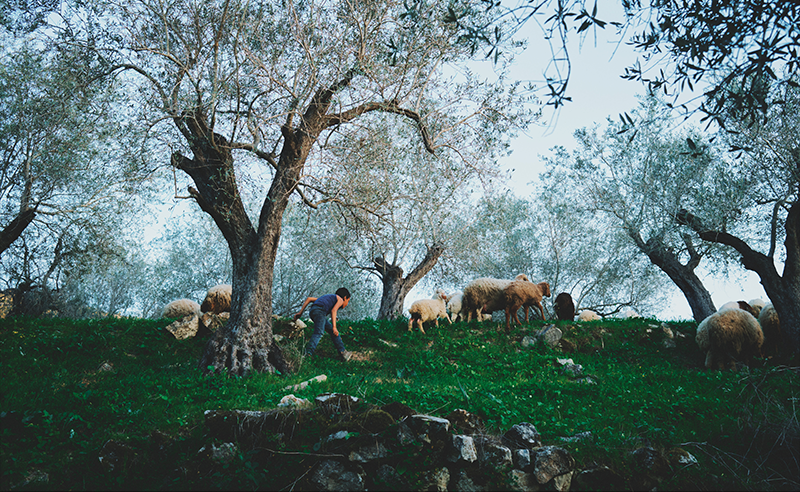 He sees the same distinction in the way we experience our inner lives, though without the physical evidence that allows us to revisit a past feeling. "There's something in all of this pattern, how life changed, how you change sometimes and you don't notice it," he says. While an old photograph can remind us of what we looked like at a particular age, there is no equivalent image that can return us exactly to how we felt at 15 or 20. "We can remember it, or call it nostalgia," Saleh says, "but the real feeling is not there."
Perhaps this is also what gives Saleh's work its particular tension, its capacity to hold conflicting feelings: loss and remembrance, nostalgia and presence, tenderness and discomfort. "I like to call it bittersweet, because I think after living for some years here on earth, I can say like things are bittersweet. There's nothing completely sweet or completely bitter."
Saleh has also developed a photography app called 'The Moment by Latent Studios', inspired by his own visual identity, particularly the colours and techniques people often ask him about. The app has now launched and is available to download.
- Previous Article Selects: Yasmine Hany Makes the Clothes She Cannot Find
- Next Article Ahmed Tohamy’s ‘Special Request’ Is Service to Anti-Fashion