Eritrean Saudi Designer Abdulrahman Burhan Makes Clothes From Canvas
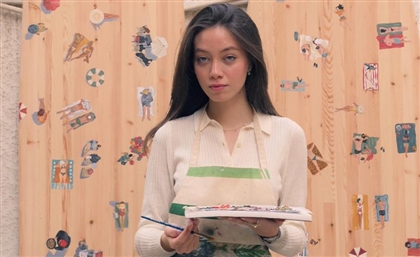
Abdulrahman Burhan's 12-piece collection, The Stages, swaps traditional fabric for canvas, using its resistance to shape garments marked with black, red and blue.
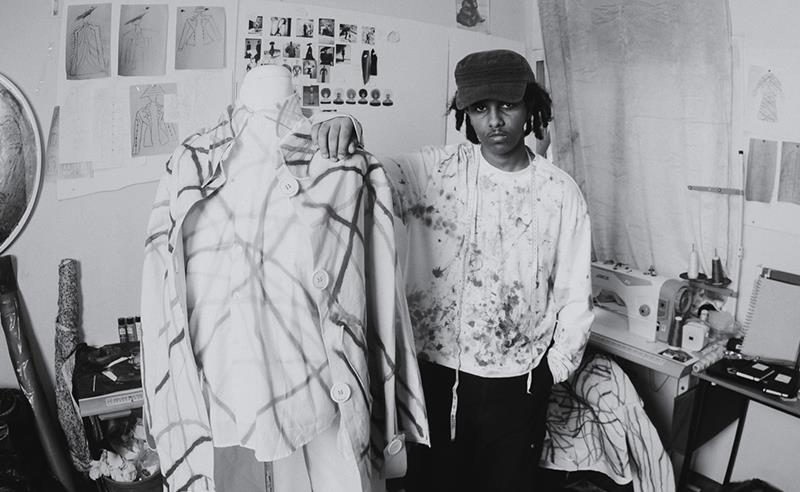
There are moments that quietly shape the direction of a life, decisions that don't feel monumental at the time but settle in the background and stay there.
For Abdulrahman Burhan, one of those moments came early. Raised in Saudi Arabia, Eritrean by background, he stepped away from school at eight. When the chance to return came years later, it arrived with a condition: either he continues his education, or his siblings do. As the eldest, he chose to step aside.
That choice still shapes how he moves, works and expresses himself today. He doesn't call it regret.
 Fashion entered gradually. At 18, Burhan began modeling, learning by proximity and watching how garments carried weight beyond their function. A couple of years later, he began considering design more seriously.
When he told his mother about the decision, she revealed that she had an old fashion design diploma, something he had never known. The discovery gave his growing interest in fashion an unexpected connection to home.
The process that followed was built from what was available. A first sewing machine. Jobs in clothing stores. Saving, then investing in a second machine. Skills developed through repetition, but the intention behind them came from somewhere less visible.
 "These pieces are not merely designs; they are spaces of confession," Burhan says. "During past phases of my life, I experienced emotional suppression and found it difficult to express my feelings to anyone. Design became the only place where I could release what was within me and transform it into something tangible."
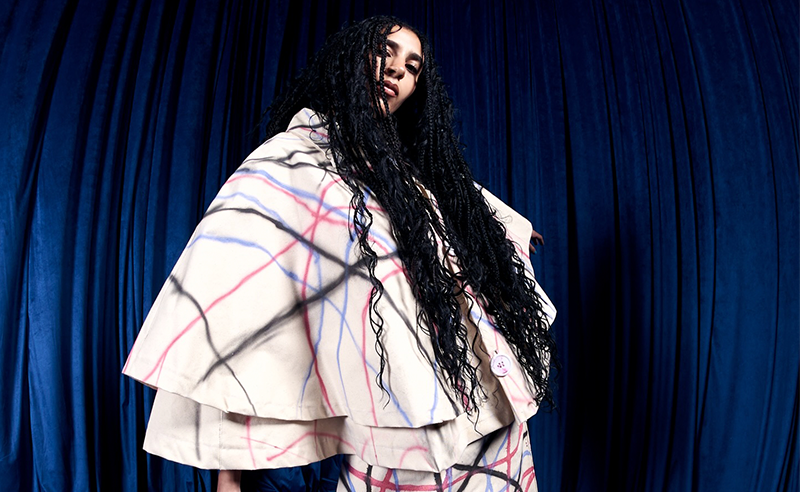
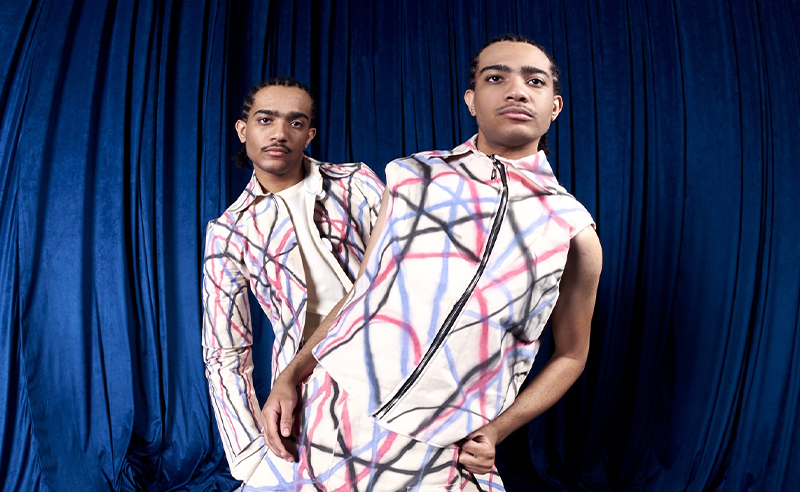
That need for release takes form in The Stages, a 12-piece collection constructed from canvas rather than traditional fabric.
"Canvas is not an easy material to work with. It resists, it pushes back, and I had to learn how to work through that resistance to form the silhouette. The difficulty of the material becomes part of the construction itself, turning constraint into shape." The material holds its own resistance, rigid and difficult to shape, bringing the garments closer to an artist's surface than a traditional piece of fabric.
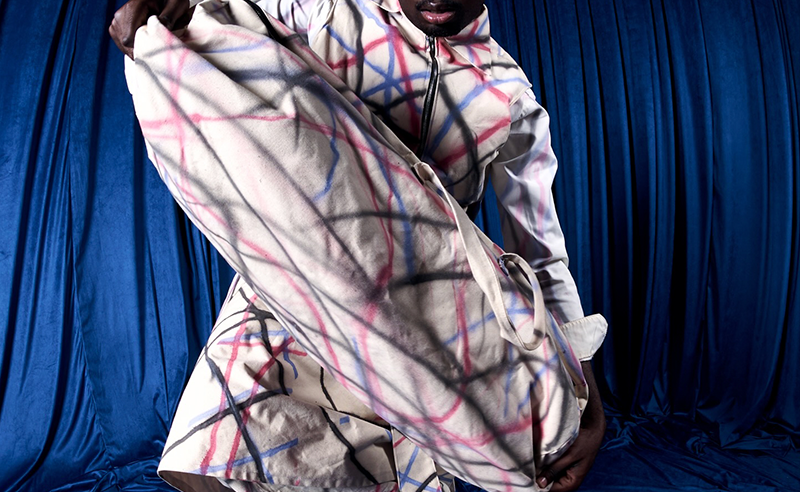 "I chose abstract art because it was the closest reflection of my emotions during that period," he says. "It mirrored my confusion, fragmentation, and inner conflict."
The collection moves across pieces, all carrying the same scattered language of lines in black, red, and blue. There is no fixed pattern to follow, the markings shift and overlap, closer to instinct than structure.
Each colour holds a place within that composition. Black settles into silence and heavier moments. Red traces distraction, a sense of being lost. Blue returns to something lighter, the point where fashion first opened up to him.
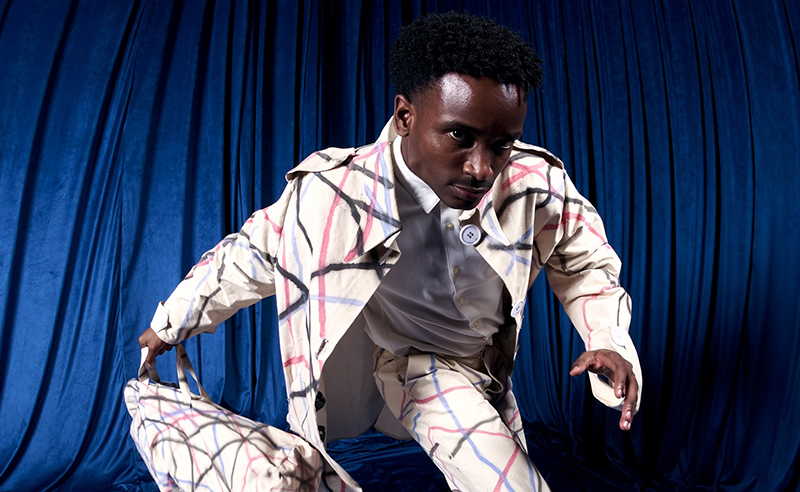 Burhan places his work within streetwear, made with a specific wearer in mind: artists, or anyone drawn to clothing that holds a narrative beneath its surface.
The title The Stages reflects an ongoing process rather than a finished one. Each piece carries a point within that movement, without needing to resolve it.
"Working on fashion more and more is what keeps me going," he says. "This is the outlet I'll keep using."
For now, The Stages sits as a record of where he has been, held in material that resists, marked by lines that don't fully settle, and shaped by everything he chose to carry forward.
- Previous Article The SceneStyled Cocktail Party Edit