Kareem Rahma Works Best in Transit
“Cairo feels like home, but New York is home.”
October, 2023.
“You’re going to feed me liver?”
“It’s my favourite delicacy, there’s a cart just around the corner,” the driver explained.
My first encounter with Kareem Rahma arrived as an audio file a colleague forwarded on a Thursday night in the colder stretch of 2023. It was, to my mild irritation, unlabelled, but within seconds it conjured a cab driver and a host whose Arabic was still very much in formation - or, as he put it, “bumpy,” in the interest of staying “true” to the setting.
Kareem indulged.
He sank his teeth into kebda and roz bel laban, knocking stainless steel bowls of koshary against a cabbie across Cairo (captured in an uncut version buried deep in our archives). Faisal - the cabbie in question - drove him to a qahwa and began to unravel the story of an accident ten years prior, and the five children he now has to provide for, despite no longer being able to withstand the physical strain of the job. Over shisha and dominoes, Faisal traced out his religious beliefs, and through the texture of his lived experience, Kareem came to understand that the worst thing a person can do is befriend someone “bad” - second only, of course, to doing drugs. Both Faisal and Kareem were born in Imbabah.
Two days later the episode aired. I saw Kareem and Faisal for the first time on screen in Keep the Meter Running.
 December, 2025.
It was T-minus 15 days until the year thinned out and the entire company slipped into mandatory leave to reboot post Q4 mania. It was also less than a month until Kareem Rahma Day - or, for the uninitiated, the Impact List 2025 party. Set across a sprawling Zamalek rooftop overlooking the city, the daytime affair unfolded with booze and burgers in circulation, orbiting an intimate talk with the man of the hour, who in 2018 made what we deemed history by planting a pop-up pizza museum in NYC.
At that point, Kareem was also frantically doubling down on the second season of Keep the Meter Running, while dabbling in a mayoral campaign and packing a carry-on filled with oversized suits and pyjama sets for his three-day foray to Cairo - his first time flying into the city as a “guest of honour.”
The day swung in temperature, veering from sharp heat to the occasional gust trailing a fleet of highly consequential people cutting across the roof, each angling to corner Kareem with a supposedly “unpredictable” hot take. He held his position at the edge of the roof, as a steady procession of people - and pitches - cycled through. Kareem was intent on floating a Cairo-set film to award-winning director Mohamed Diab, himself.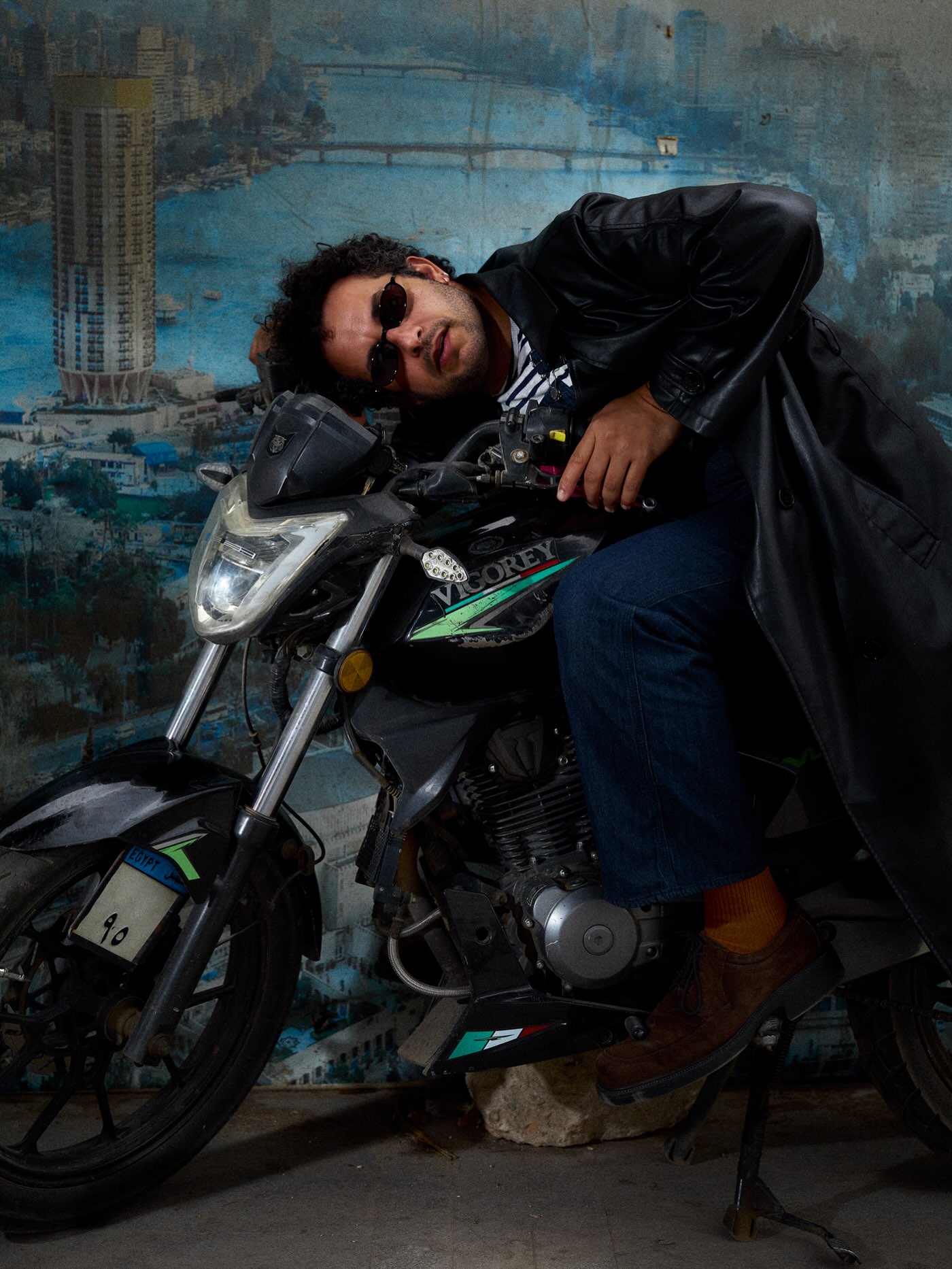
February, 2026.
Kareem drifted one floor down from his hotel room for his first - and ultimately only - fitting. He stepped into the proverbial powder room in slippers and a matching grey PJ set, lined with thin white pinstripes. He’d run on just three hours of sleep, after jolting awake in the dead of night convinced he’d missed his call time, only to spend the next six hours suspended in that familiar, futile attempt to fall back asleep.
We’d been orchestrating a large-scale cover story with Kareem for weeks, and when acclaimed creative director and long-time surrealist photographer Bassam Allam laid out a vision and moodboard of his own - and signalled he was willing to fly in from Berlin - the pieces clicked cleanly into place.
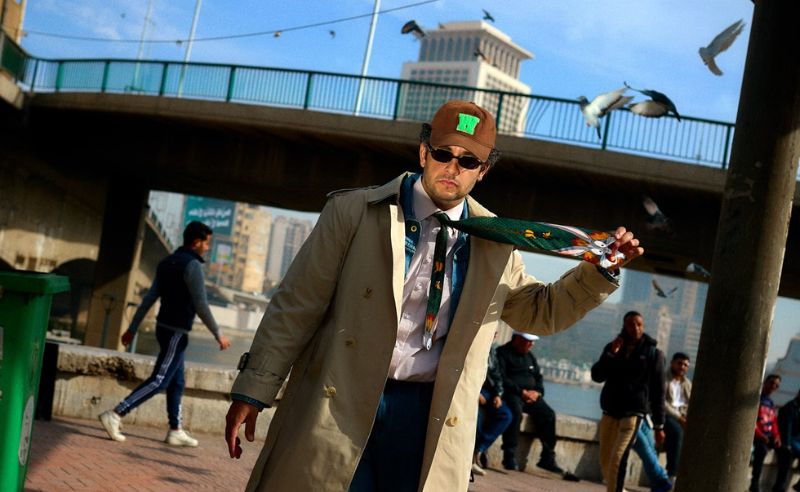
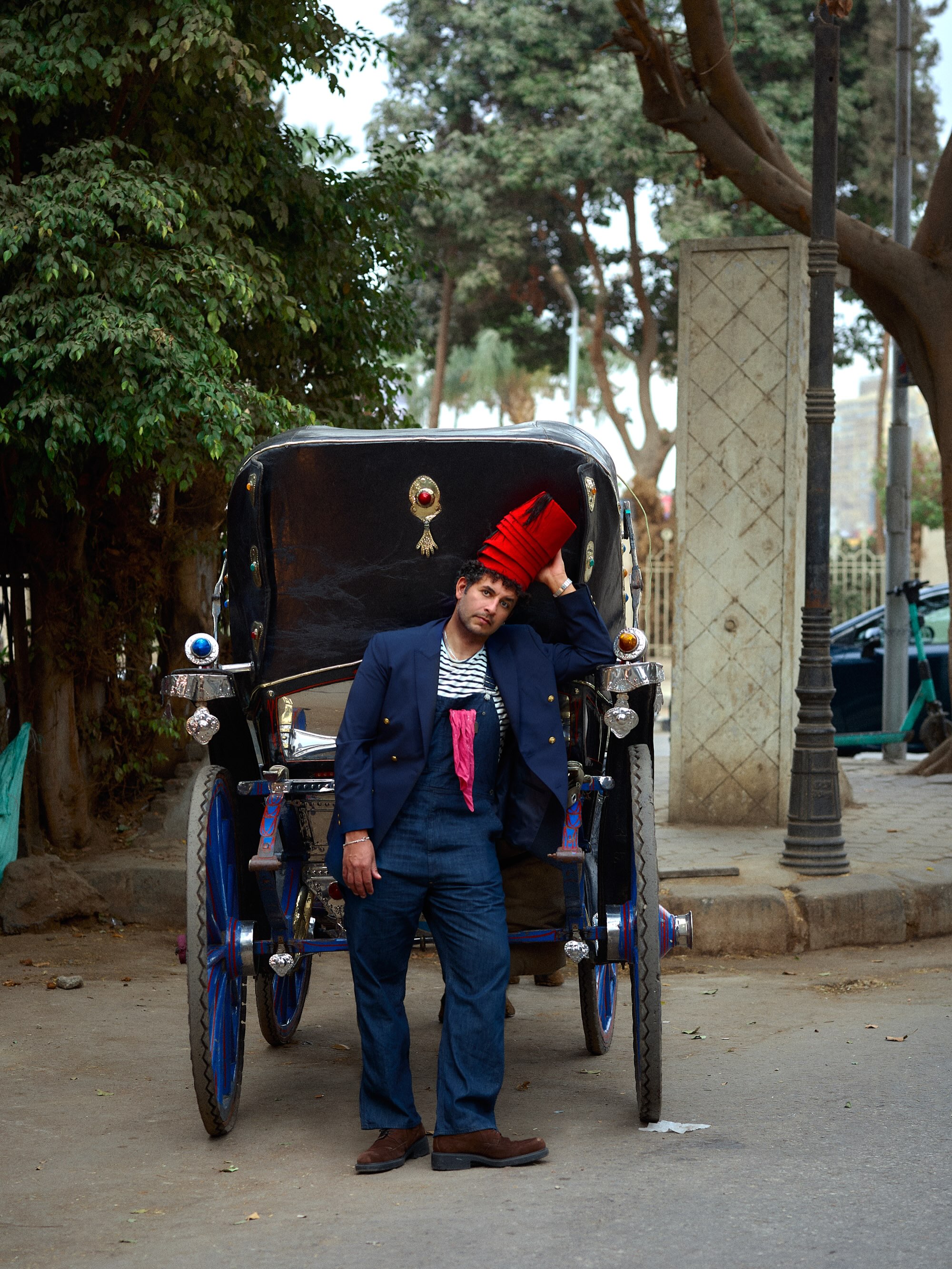
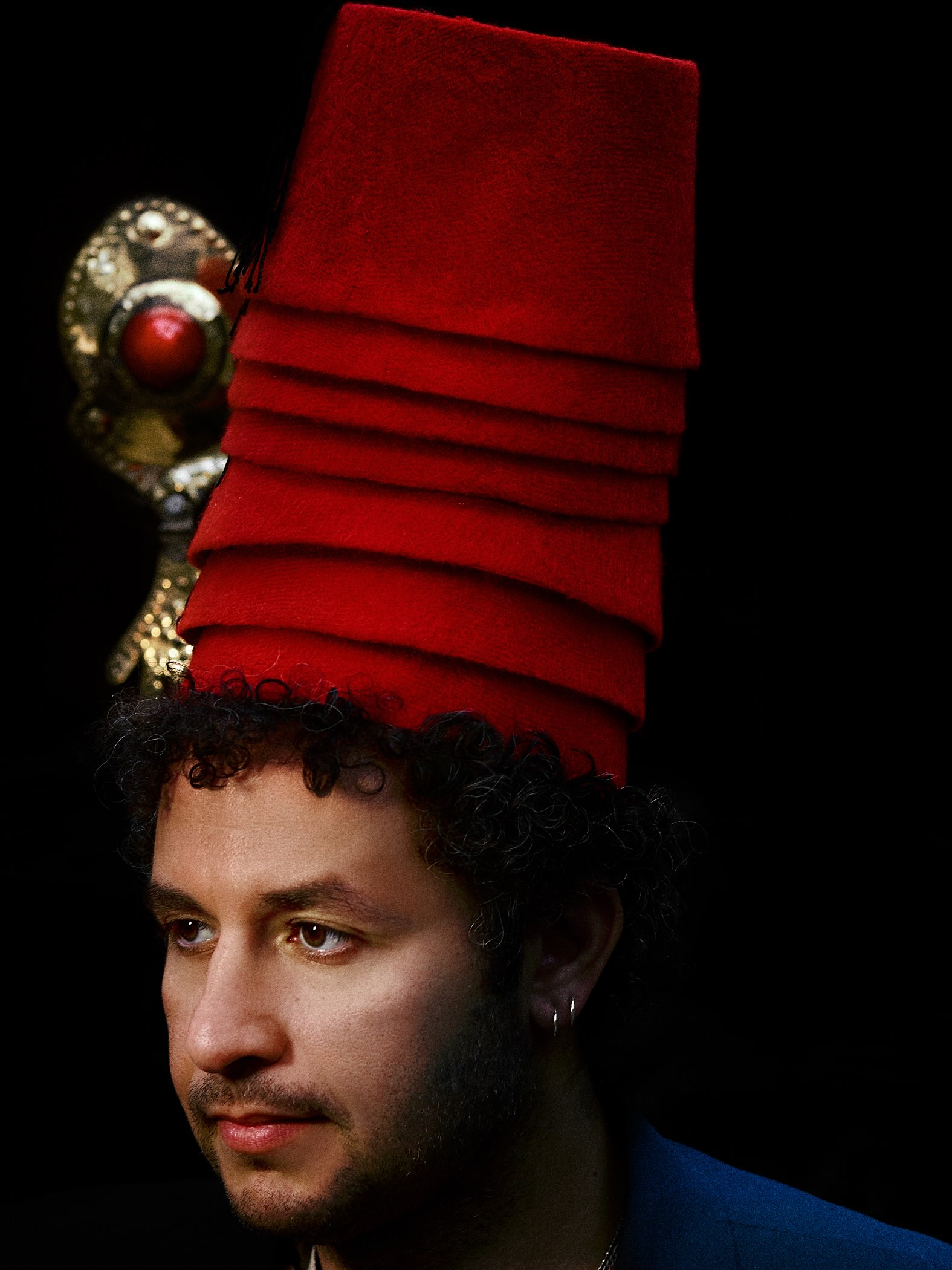
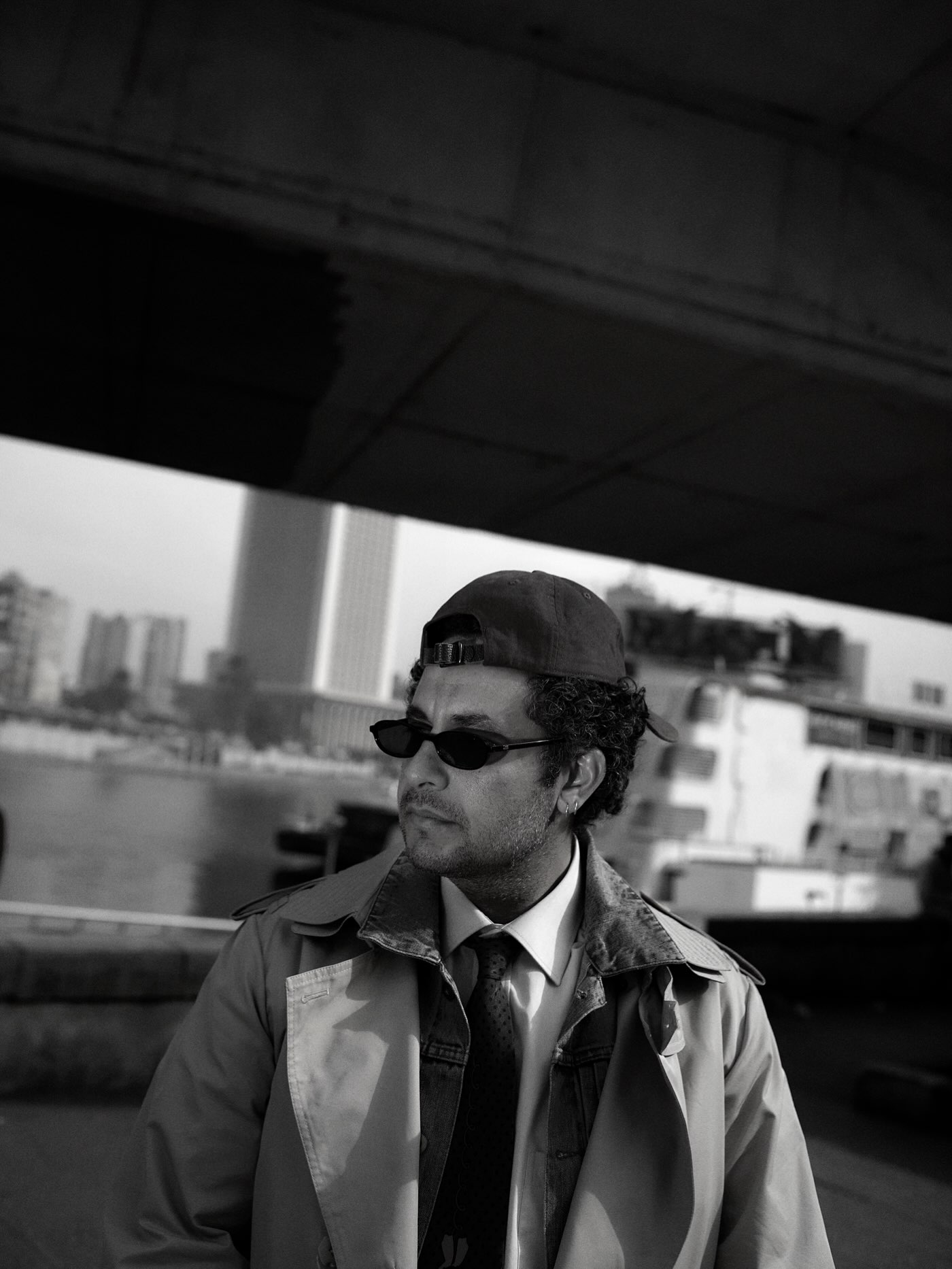
The visual storyline Allam envisaged demanded to be staged across multiple sites in Zamalek, “the city offers us an open stage with real interactions and most importantly, chance,” Allam explains. The visual narrative also leans into a studied dichotomy: two metropolitan centres, two distinct worldviews, two people articulating parallel versions of the same story. “The tension between his world and my visual language was the catalyst,” he expresses. “I wanted to portray Kareem in a way most true to his character while also fitting within the frames of my surreal world. All of this, while achieving subtle goals like decolonising the visual language.”
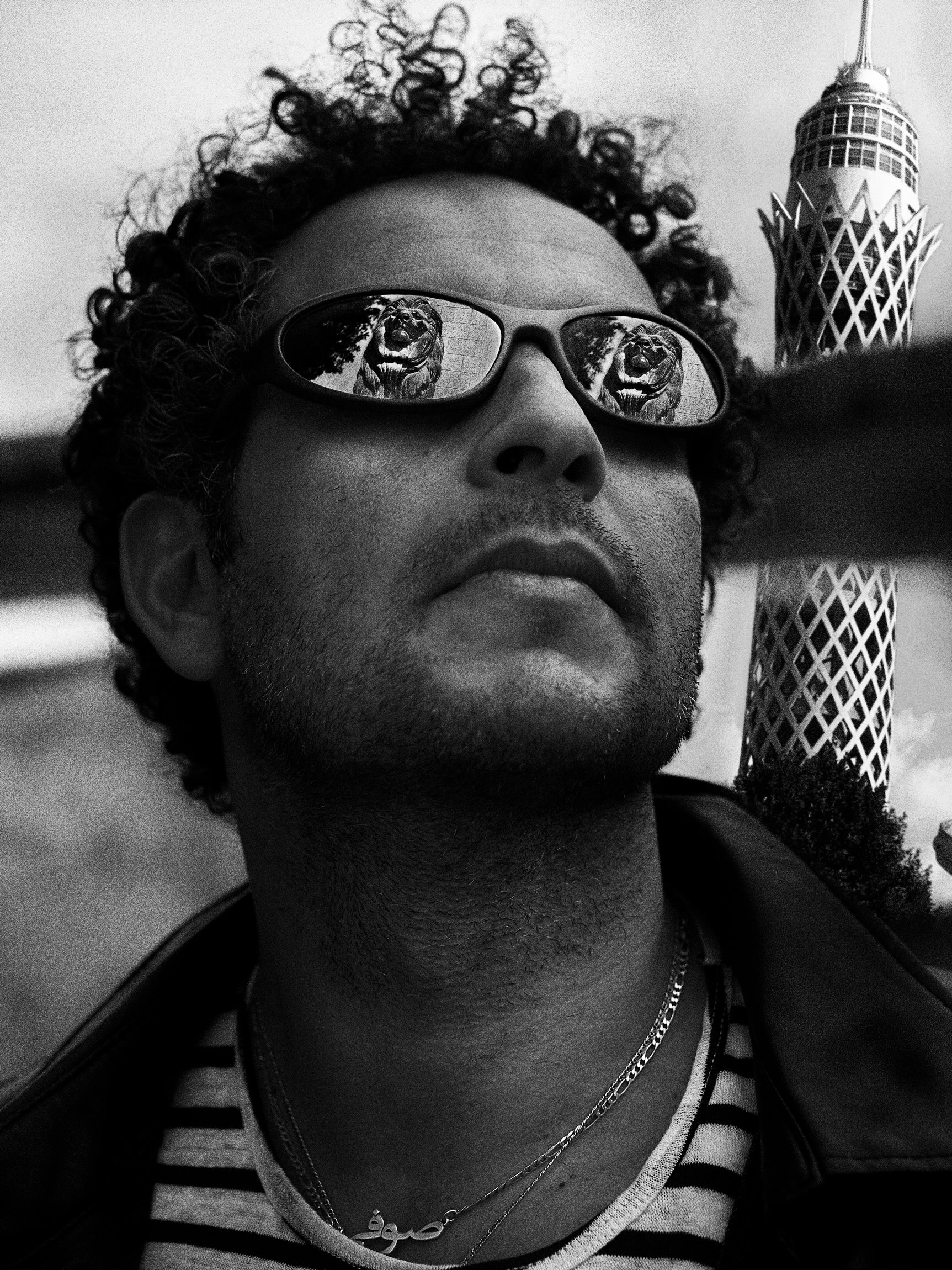
Allam wasn’t interested in any act of repatriation. New York is the home Kareem lays claim to; instead, he set out to map the points of convergence, “The focus was on the areas of overlap and similarity between both cities. It was about the result of his presence and interaction with Cairo.”
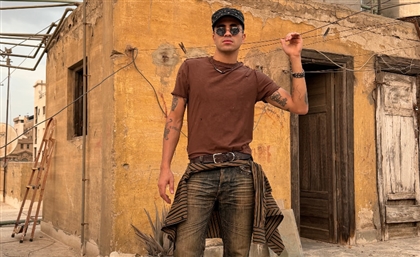
To dress the vision, one of Egypt’s most prominent stylists, Ahmed Sorour, assembled racks of looks that leaned into the parody while enhancing the playfulness of Kareem’s personal style.
Kareem settled into a chair and worked through a light breakfast - halloumi simit and tahini latte (a decision both I and our executive producer had firmly steered him toward) - while watching a growing pile of hats and ties being sifted through for the right combination. A Donald Duck tie quickly emerged as the crowd favourite.
April, 2026.
Kareem Rahma, is, undeniably, not problematic. He’s also very punctual. Months after roughly eight hours spent roaming the streets of Cairo in a petroleum-blue Toyota Corolla - deep in what is now referred to as “yapping” - we agreed another, more in-depth conversation was needed. He took the call from a grey sofa in his New York City home, the skyline framing the screen.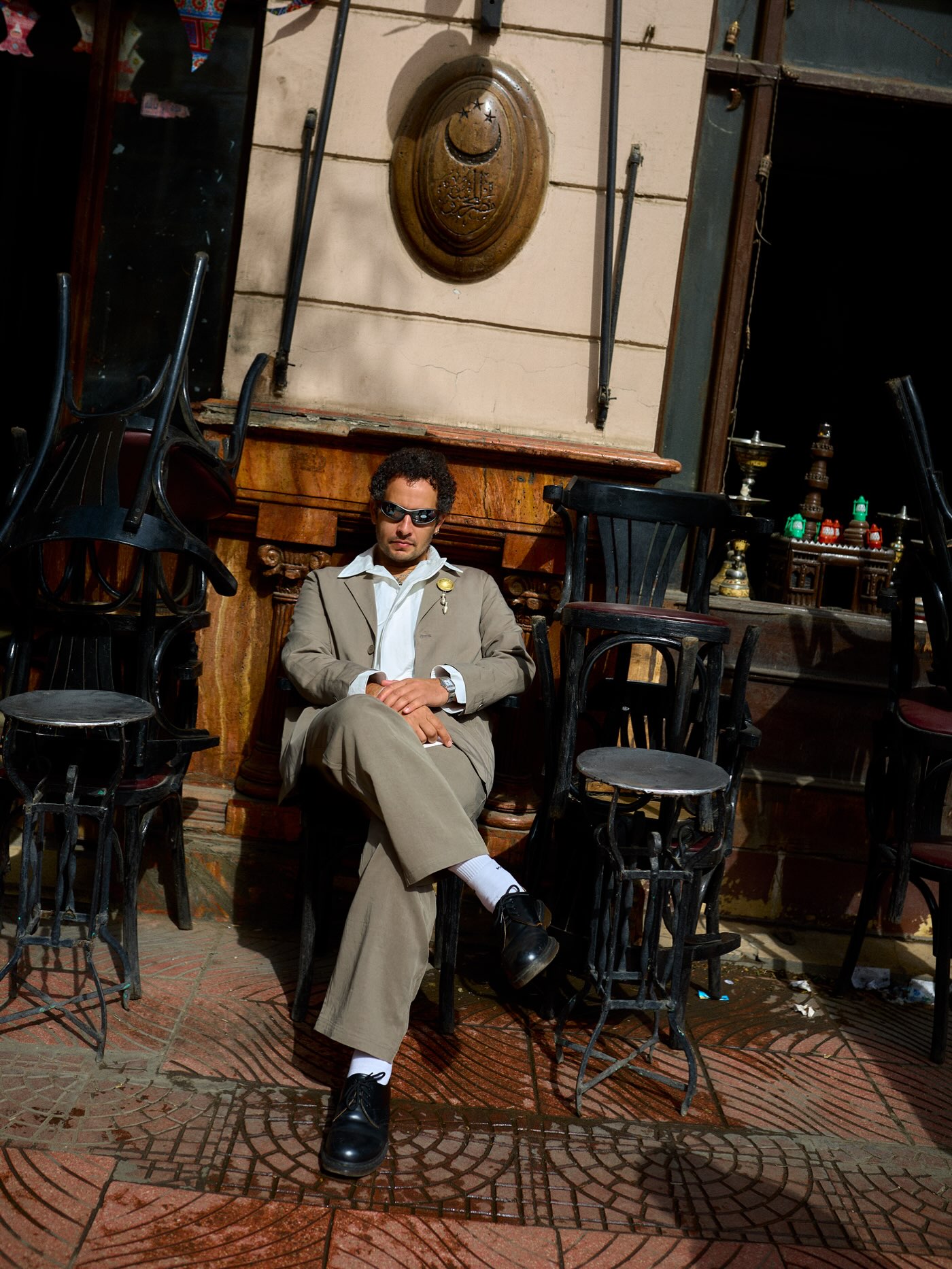
At 39, Kareem has effectively sidestepped - and, at times, outmanoeuvred - the flattening conveyor belt of the creator economy. “I’m a three-dimensional human being in a world that wants to make people one-dimensional,” he says , settling on entertainer because it extends far enough to contain what he does. “it felt like the broadest, most encompassing sort of vibe… which is to entertain, not necessarily inform”. To New York’s commuters, he is the man in an oversized suit and slick frames, mic in hand - metro card affixed - holding court mid-transit as people (mayors, presidential candidates, Grammy-nominated artists, occasionally) overextend themselves into explanation. Why more men should be wearing lip gloss. Why crowds should start booing again. Why dating advice should be treated like ibuprofen - administered in one or two doses, depending on the severity of your condition.
If he’s not on a moving train, he’s in a moving cab - different wheel count - platforming the stories of the city’s so-called “anti-heroes.” Where Subway Takes thrives on brevity and instinct, Keep the Meter Running stretches into something more porous, trading polish for proximity. “I think cab drivers, or any blue-collar worker, have the same fundamental challenge of being perceived as three-dimensional people because you see them in their job,” he says. “This guy drives a cab, and you don’t really expect that he’s also a semi-professional soccer player, or is a poet as well, or has a one-man show that he wants to put on Broadway. There’s depth to everyone.”
 Now in its second season - set to debut this May, with two episodes screening at Tribeca - the show sits closer to Kareem’s centre of gravity. From the outset, it functioned as a kind of corrective. In a city that runs with the logic of a mechanical system - self-propelling and almost indifferent - those reduced to its moving parts tend to go unheard. Keep the Meter Running pushes back on that reading, prying something to the surface. “It showed me that there was an appetite to take a peek into the lens of other people’s lives,” he says. “And it also made me realize that everybody’s got a story to tell. They just need a microphone to tell it to, or an audience to tell it to.”
The season is way more personal “I reveal a lot more about myself,” he shares. “It becomes more about me than it does about the cabbie in many episodes because I’m just completely open and vulnerable. They have an ability to talk to me in a way that I think I have the same ability to talk to them. And it’s like this mutual respect. It’s like game recognizes a game, or real recognises real.”
For someone capable of articulating the internal logic of his work with near-clinical clarity, Kareem remains suspicious of any reading that casts him as especially introspective. If anything, he thinks the version of him people project carries more weight than what’s actually going on in his head most of the time. “I think people think I’m a lot deeper than I am,” he says . The reality, by his account, is more errant. “My wife will always be like, ‘What are you thinking about?’ And I’ll be like, ‘I’m thinking that I have to change the oil in the car.’” He pauses, then adds, “She’d be looking at me and she’s like, ‘What are you thinking about?’ And I’m like, six years ago I ate at this restaurant that was so good, and I can’t remember the name.”
At his core, Kareem is a self-proclaimed observer. More often than not, he’s tracing storylines, “thinking a lot but not overthinking,” and defining “home” on his own terms. To say that the U.S. is his home would be inaccurate - he spent over a decade in Minnesota, and it never quite clicked. It wasn’t until he moved to New York at 25 - around the time he began properly building his career across journalism and advertising from the ground up - that a city started to read as home.
Even then, that sense of belonging remains specific rather than fixed. It applies to New York, but not rigidly. He cares about the city enough to engage with it politically, but he is not a political person. His focus stays local, grounded in his neighbourhood, and by extension, in his work - without extending that same attention indiscriminately. What matters to Kareem personally tends to define what makes its way into his work.
“I inherently care about my community and my country and my city. It’s not a strategic kind of element. The mayoral campaign makes a lot of sense because I live in New York. But I’ve been pitched ‘politicians’ from around the country running for office in different cities. I’m like, I don’t live in Idaho. I don’t live in Wisconsin. I don’t live in Ohio. I’m sorry, I don’t want to get into local politics. I don’t even really want to get into national politics. It’s not my responsibility. I think it’s my responsibility to be vocal about the things I stand for or against, but that’s just a personal responsibility. It’s not the responsibility of an entertainer.”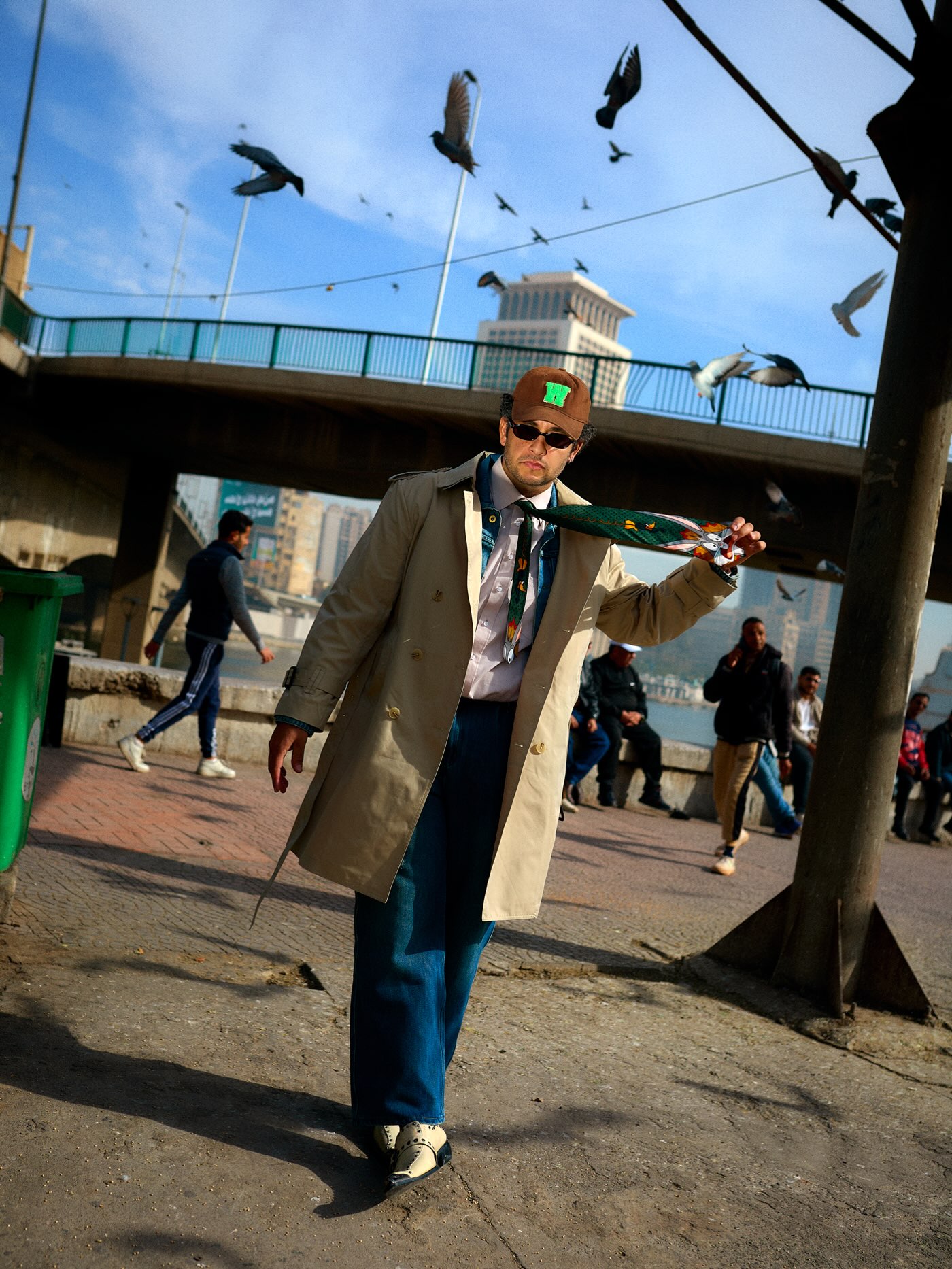 Kareem’s experience of Cairo is tied to his late father, but not fully governed by that connection. He describes his father as “the most Egyptian man,” a seed that grew into an emotionally mediated understanding of the city. “He was the closest to me. I definitely see a lot of the world through him, especially when I’m in Egypt. I try to go to places that he used to like to go to and sit with people that he liked to sit with. Sometimes I just imagine him sitting on the Nile at the Hilton, which I know he liked to go to, and I wonder what he was thinking about, you know? He used to just crush ‘termes’ (lupine beans) and just hang out. Sometimes I’ll daydream and wonder what it was that he was doing or thinking about.”
Much like his best work, Kareem’s relationship with Cairo remains in transit. “I love Cairo, but I’m still a stranger,” he says. “It does feel like home, but it also feels like I’m a visitor. New York City is my life… It’s my home. I think Cairo feels like home, but New York is home.” It’s the city he got married in in the spring of 2026, and the “alternate universe” where he imagines a different kind of creative outpour - but that deeper, instinctive sense of belonging, for now, rests elsewhere. That doesn’t displace Egypt as his instinctive point of reference when asked for a take. “Cairo is one of the most underrated cities in the world. I think it should be up there. It’s just not. People go to visit the pyramids and that’s it. Or they think about Egypt and they’re like, ‘Oh, I’m going to go visit the pyramids,’ but they’re not thinking about Cairo as a cultural hub.”
Few would assume that someone juggling that many projects would carry a similar logic into his personal life, but Kareem, like most of us, leans into a more recognisable pattern - keeping himself busy enough to drown out the static. “I overwhelm myself by saying yes to too much stuff, or being too excited about too much stuff,” he says. “And then I end up regretting it, and I don’t have any time for myself. But that’s also a way to cope with depression… if I’m always busy, I have no time to think about being sad.” While he may be too occupied to sit with sadness, he’s never too occupied to push hard enough to impress his baby - a driving force behind the lack of sleep and the ever-expanding scope of his personal output, “I want her to go, ‘Wow, that was a really cool guy who lived a really cool life and did really cool things.’”
Wanting to seem “cool” to his daughter doesn’t quite translate into self-belief. For a long time, Kareem treated what he does as something broadly accessible, almost incidental - hardly a skill, certainly not a defining one. Those early years of his career were edged with that suspicion, a low, persistent sense that he was operating at a kind of baseline. It stayed with him, largely unquestioned, until it was punctured. “It wasn’t until - I think it was Woody Harrelson - who was like, ‘I just want you to know, I haven’t had this much fun since I was on David Letterman in 1995 or something,’ and I was like, fuck, that is the best compliment I’ve ever received. And then other people were like, ‘Hey, you remind me of Anthony Bourdain.’ That’s really big shoes to fill.”
Kareem is often framed as a “latecomer” to the industry - though the term feels imprecise, closer to the way people take up mountaineering in the midst of a midlife course correction. The broader content ecosystem tends to favour an earlier ignition point, with most now-viral creators emerging in their late teens or early twenties. Kareem entered on a different timeline, and never treated that lag as a deficit. “I don’t have the time and flexibility and bright, bushy-tailed eagerness of a young person,” he says, “but I definitely have something they don’t have, which is perspective…Hindsight is 20/20, and I have a bunch of it.”
Photography & Creative Direction: Bassam Allam
Produced by: SceneStyled // MO4 Network
SceneStyled Managing Editor: Farida El Shafie
Executive Producer: Munky
Agency Producer: Hesham Baghdady
Styling: Ahmed Sorour
Photo Assistant: Yasmine Allam
Styling Assistant: Noureen Shafik
Hair: Mowafak Ellithy
Editorial Design: Noha El Sawi
- Previous Article Egyptian Fashion Label Rigash Launches Its First Eveningwear Line