Nelly Karim Is In Full Bloom
To experience Nelly Karim is to encounter a body of work that extends beyond performance.
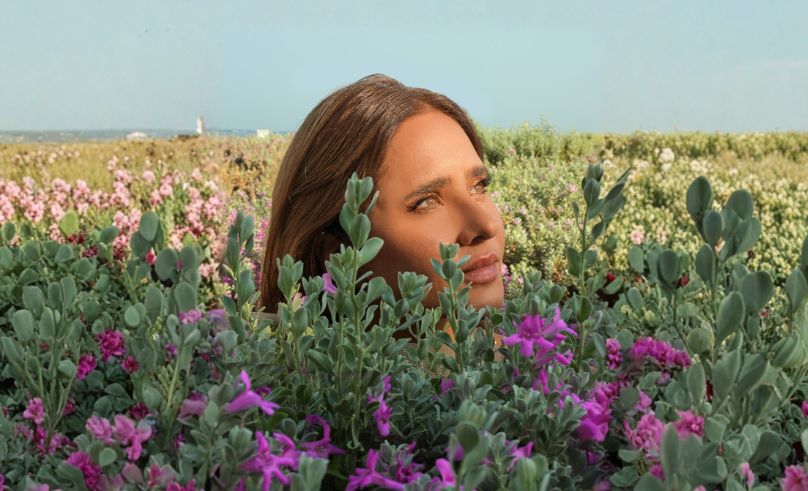
It is a warm Wednesday afternoon in El Gouna, but the warmth is not generous. It sits on the skin, stubbornly. The air is edged with mildew and salt. Around the pool at La Maison Bleu, bodies are arranged in varying states of leisure.
Two men in white cotton shirts and belted trousers struggle with a chaise longue I have asked to be turned toward the dolphin statue breaking the water’s surface. The object refuses cooperation. It drags, resists, insists on heaviness. I notice, briefly, the disproportion of the request to the labour required, then abandon the thought. It is, after all, Nelly Karim.
I move along the perimeter, my white shirt chaffing intermittently against the blue walls, mapping angles in my head for the executive producer and the photographer. Beneath a low spill of pink shrubbery, I crouch, then drift toward the Red Sea, slipping briefly into that sandy lull before returning to the setup.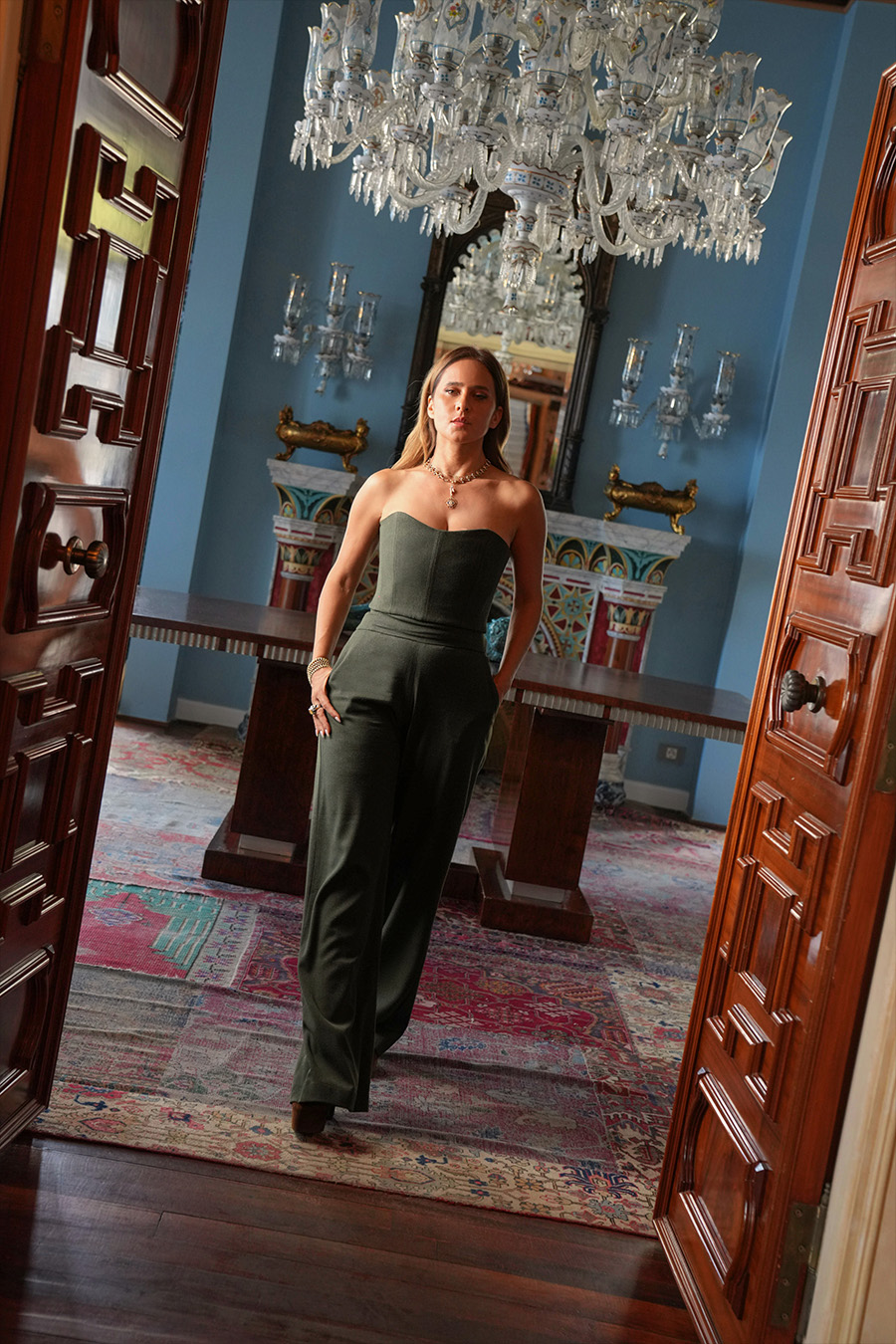 Nelly Karim arrives with a pared-back entourage - two women, three bags, an iPhone. She’s corseted in a green linen co-ord, her hair precisely set, falling the full length of her back. Her sunglasses hold the same tone as her skin. Her eyes are washed in pink and gold; her lips, set with Dior Lip Glow, stay closed as she lights a cigarette and asks for the menu.
“I’m hungry,” she says. “Let’s eat before we start.”
She rises from her seat and reaches for the photographer’s hand. “I don’t want to keep you,” she says. “Let’s start with this look while the food arrives.”
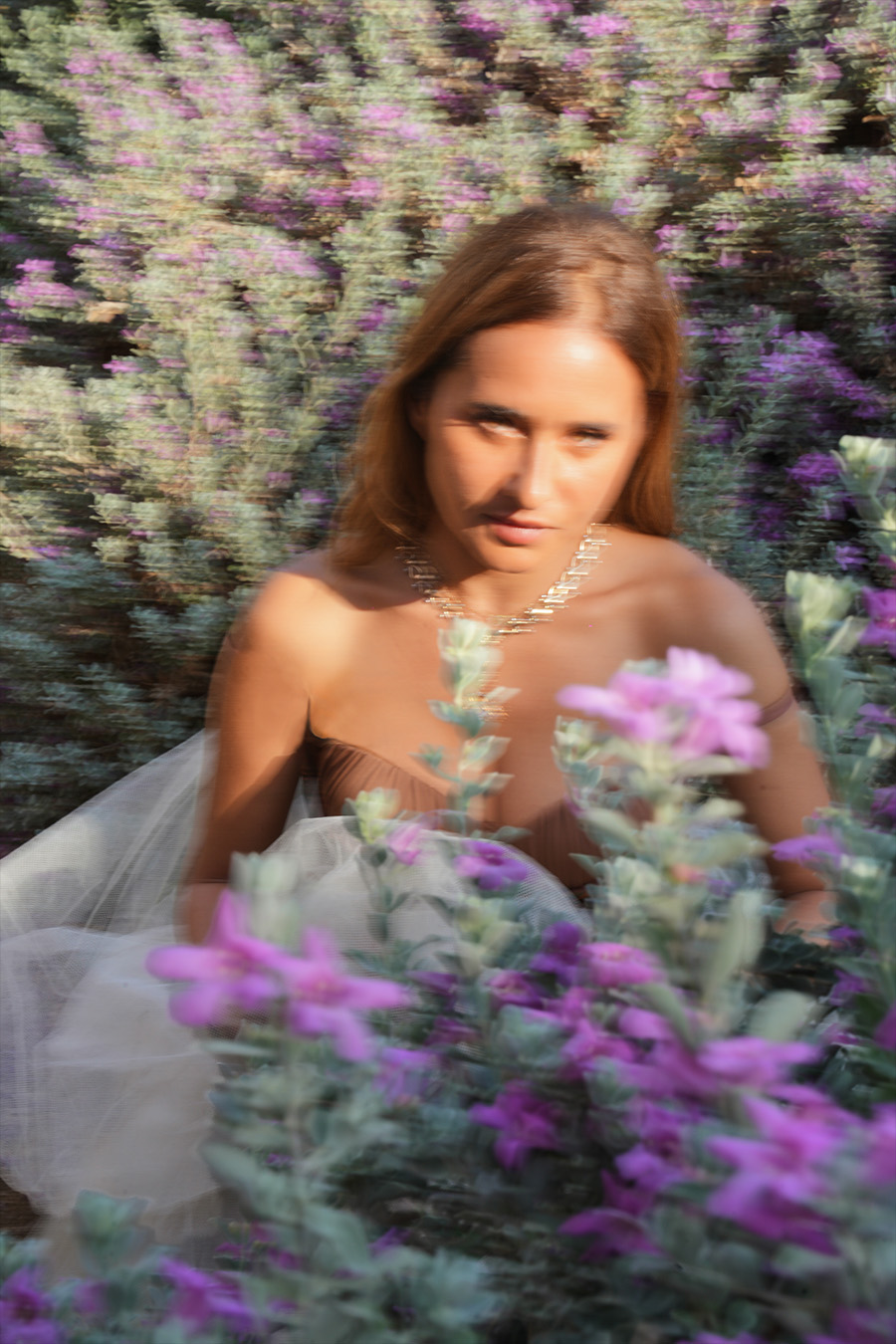 A path opens almost immediately, cutting through to La Maison Bleu’s lobby. The space is dense with detail - gold-accented surfaces, baroque sofas arranged in clusters, a small chess corner set slightly apart, chandeliers hanging low enough to register for anyone taller than average. She began leaning on the walls, angling her poses to the curves of the space. We frantically adjusted to meet her frame. The whole room was frantically adjusting to meet her frame.
Time acquires a peculiar elasticity when spent watching one of Egyptian cinema’s most canonical figures move through a lens. It is not surprising, then, that Karim’s early years as a professional ballerina continue to underwrite the way she works. That training does not sit behind her career; it runs through it, shaping both the image and the instinct. “Ballet has shaped me deeply,” Karim shares. “I was a professional dancer at the Egyptian Opera House, and before that, I studied in Russia.”
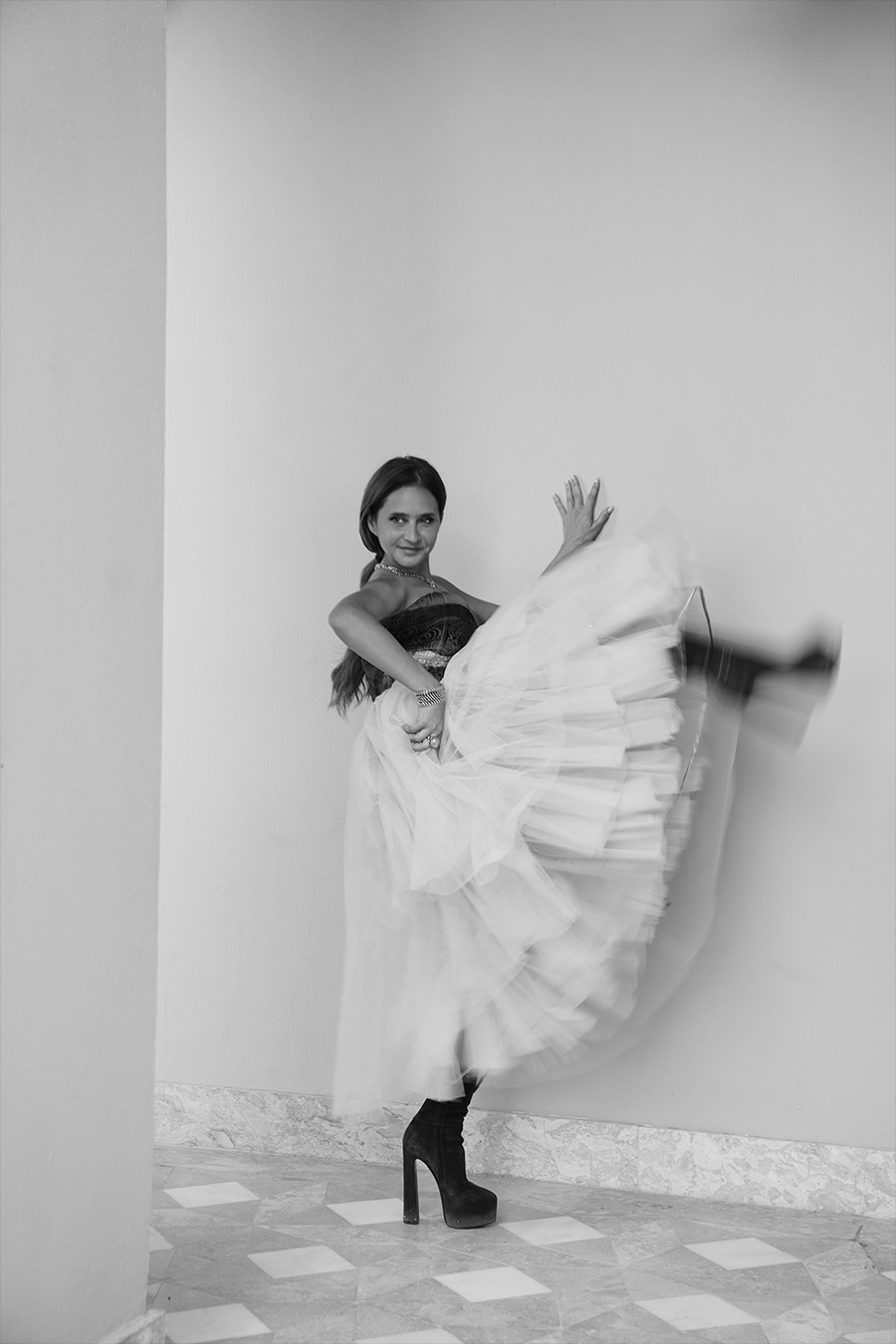 The expectation, at least at the outset, was one of formality - the discipline of the body extending into the discipline of self, a certain composure carried as naturally as a pair of pointe shoes. But what remains most visible now is control. “That background gave me discipline and a different way of understanding movement and emotion,” Karim continues. “I was fortunate to be taught by legendary figures like Dr. Magda Saleh and Dr. Abdelmoneim Kamel who instilled in me a deep appreciation for Egyptian culture and the arts.”
Control threads through Karim’s demeanour, though it never hardens her. The Kojak closet she arrives with will be styled a certain way. The same applies to her hair. She knows who she wants. The rest of us don’t. So we call Al Sagheer - once, then again, then enough times to realise the uncertainty is entirely ours. On their end, they know exactly who she means. He is sent over almost immediately, just as she slips on knee-length brown suede boots that complete her second look and - ironically - complicates the very idea her process seems to suggest and denounces a desire to portray women who are, for a lack of a better term, in charge.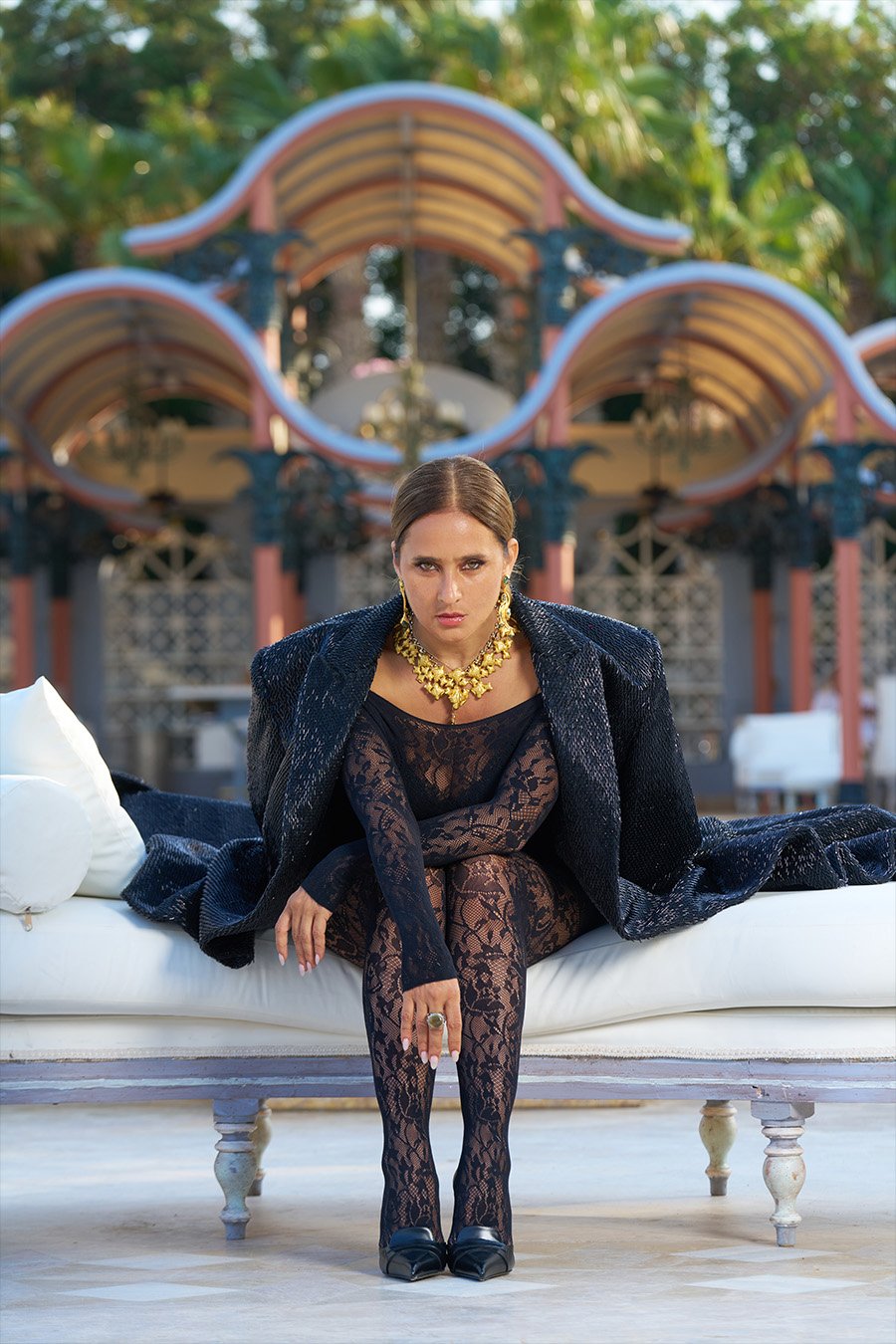 “I’m not interested in extreme character types. Not the overly strong, and not the submissive either. I’m drawn to something more internal - women who carry their emotions quietly, even in sadness.”
The statement acquires its full weight when set against the long arc of her work. In Cairo 6,7,8, A Girl Named Zaat and Voy! Voy! Voy!, the women she inhabits are seldom defined by what they assert. They are shaped, instead, by pressure that accumulates rather than erupts, by lives that resist tidy resolutions. “I’m interested in ordinary women,” she continues. “The kinds of women whose emotions I understand instinctively.” There is no perceptible distance in the way she speaks of them. If anything, the boundary feels faint, almost provisional. “All the women I’ve played are, in some way, part of me. Their emotions are mine.”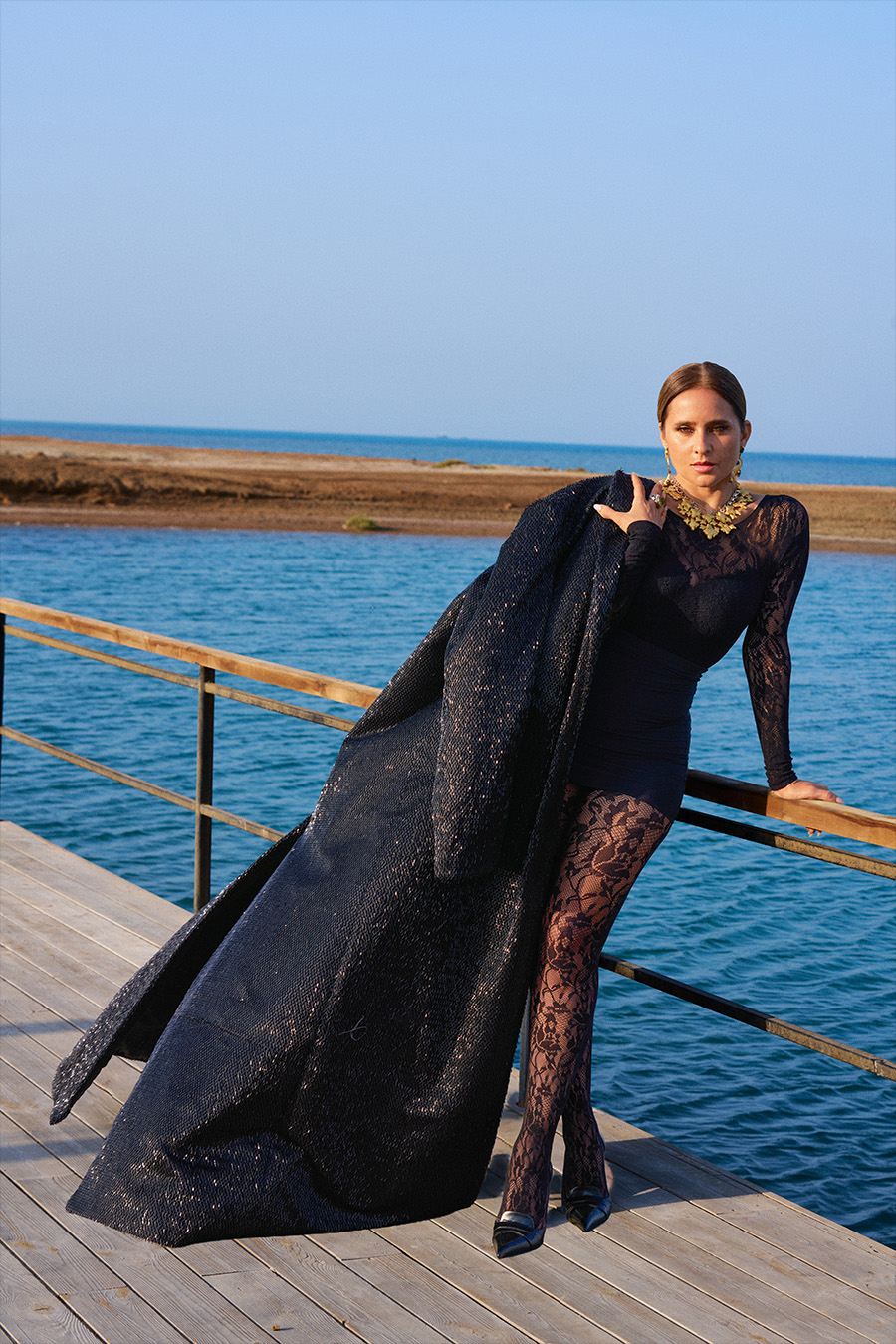 At no point during the shoot does Karim ask to be touched up. She steps away only when necessary, retreating briefly to her suite after an outfit change to take a few urgent calls. It never extends beyond ten or fifteen minutes. There are barely any interventions and no one was around holding an oversized powder brush either.
It follows. Her entry into acting is often traced back to Faten Hamama - a kind of shorthand for beauty that never existed apart from performance - but what lingers is not the image but rather the ethic it carried. Not beauty as something to be preserved, but something incidental to the work itself. It recalls, faintly, the tension Zadie Smith circles in On Beauty - the suspicion that surface, once overattended to, begins to hollow out whatever sits beneath it. Karim moves in the opposite direction. There’s a through-line in the way she speaks about her work that resists organising performance around appearance and returns, instead, to something more interior. “I live the character completely. I’ve never approached a role thinking about whether the character should look good. That doesn’t matter to me.” It’s less a rejection of beauty than a refusal to let it dictate the terms. “I’m drawn to silence. When I watch silent films, I feel more. There’s an inner expression that comes through without words. Sometimes, speaking reduces the intensity of emotion.”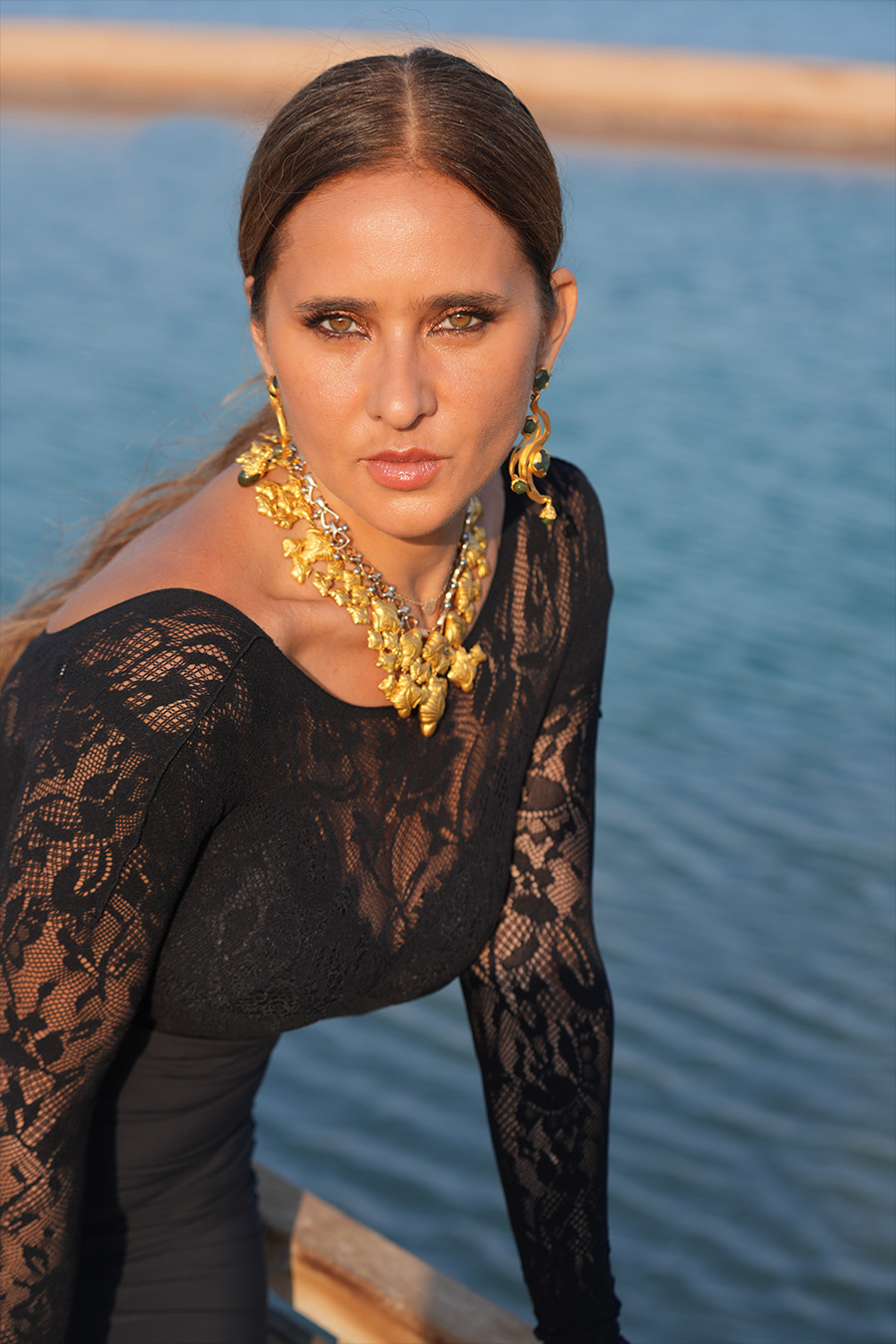 It takes no genius to see that Karim is as drawn to the space behind the camera as she is to the one in front of it. Just as a frame is about to change, she moves first, stepping into positions that sway softly with the logic of the scene before they are even formally suggested. And yet, when we ask her to trade her stilettos for hotel slippers and hobble across the beach to the pier - what we have decided will be the defining shot - she takes a hand and goes. She asks very little. She follows the direction. That same ease is evident in the way she speaks about the directors she has worked with, a dynamic that is particularly clear in her most recent film, Happy Birthday.
When she turns to Happy Birthday, her most recent film, the scale contracts but the stakes do not. Directed by Sarah Goher in her debut, the film follows Toha, an eight-year-old domestic worker moving through the hierarchies of a wealthy Cairo household, where her relationship with the family’s daughter unfolds in small, charged moments - glances, gestures, a birthday she is allowed to organise but not inhabit. It is a story built on proximity and exclusion at once, where class is never announced outright but felt in the space between what is permitted and what is withheld. The film premiered at the Tribeca Festival, where it won Best International Feature, Best International Screenplay and the Nora Ephron Award, marking it as one of the most internationally recognised Egyptian films of its year.
“When I first read the script for Happy Birthday, I was drawn to the idea and the story,” Karim says. “I was expecting something different from Sarah, especially since she’s spent so much time behind the camera. I wanted to be part of her first experience directing.” What held Karim was the thrill of the very cerebral social constructs the film attempts to explore and dismantle. “In Happy Birthday, I chose the heroes and the stories I wanted to tell. I’m interested not just in plot, but in the emotional and psychological states of each character.”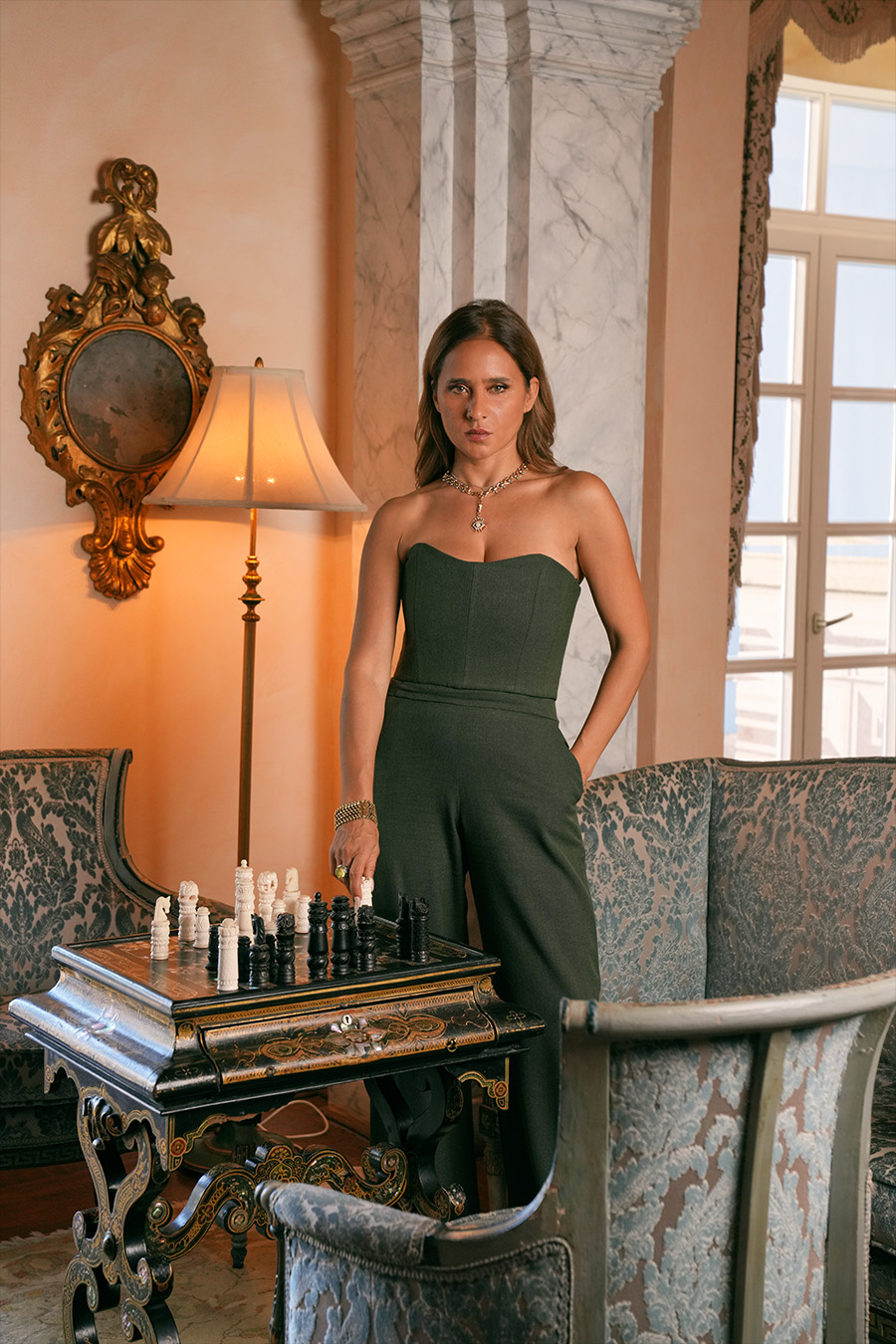 Across decades of work that have moved through awards, festivals, and the kind of recognition that tends to settle careers into place. Hers has not settled. “I don’t like repeating myself,” she says. “I always want to move toward something I haven’t done before. I’ve done cinematic work, but I’m still searching for something deeper and more meaningful.”
By sunset the gold in the lobby had thinned out, the pool gone a harder blue, and it was then, in that hour when everything begins to show itself a little more plainly, that something in Nelly became legible. She has what I can only think to call a diaphanous presence, the same one that follows her characters from role to role. She speaks about her years as a ballerina, another version of herself that still exists somewhere parallel. Later, she picks up a chess piece and turns it between her fingers, lightly, almost absently, and there is in that movement the same contained challenge she brings, almost magically, to all the roles she inhabits.
- Previous Article Okhtein Launches Bespoke Bag Customisation in Riyadh and Dubai
- Next Article SELECTS: Nourine AbouSeada Styles the Many Faces of Herself