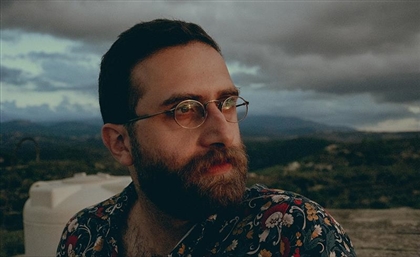
KOTN’s Tefnut Finds a Better Kind of Performance Wear
In Saint Catherine, KOTN’s Tefnut reframes performance wear through cotton, long before synthetics defined the category.


What, exactly, do we mean when we say ‘a life is hard?’ And who, precisely, is doing the measuring?
Is it the absence of what we have come to call comfort - the soft chair, the cooled room, the fabric that promises to regulate our temperature before we have even felt the heat? Or is it something else entirely: a life in which the margin for error is thin, but the relationship to necessity is direct, unmediated, intact?
And what happens - this is the more delicate question - when such a life is observed from elsewhere, exotified, romanticized and examined from a place of relative excess? Does it become aspirational? Or does it simply become a story we tell ourselves about endurance, one that flatters our own appetite for meaning?
 These are the questions that sit, softly but insistently, at the centre of Tefnut - KOTN’s latest collection and campaign, shot in the shadow of Saint Catherine, where such questions are constantly lived.
The road to Saint Catherine does not resolve these questions. It complicates them. At the base of the mountain - Egypt’s tallest, though the superlative feels unnecessary - life continues without commentary. The Jebeliya Bedouins move across the terrain, and for ‘Taher,’ who has spent his life here, the mountain is not something to be merely navigated. It is something already known.
“We live in a world built for comfort,” Rami Helali, the founder of KOTN, tells Scene Styled. “And yet beneath it, there is a quieter instinct: to return to something harsher, simpler, more honest.”
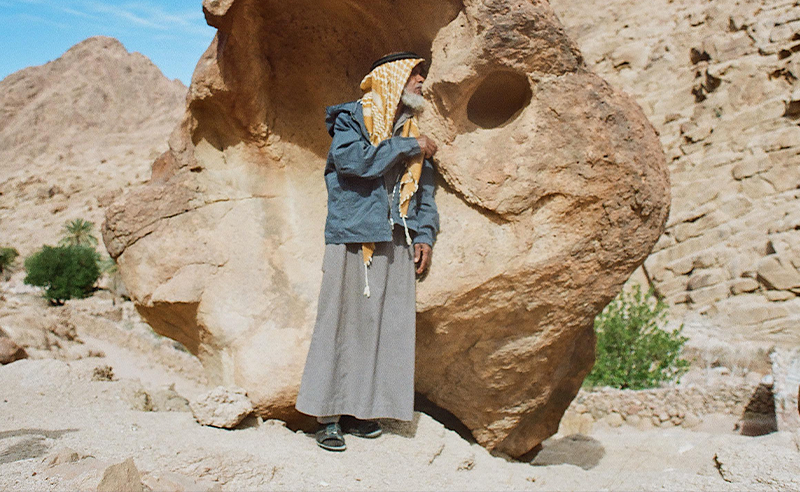 This is where Tefnut begins to take shape - not simply as a set of garments, but as a way of looking. The collection positions Egyptian cotton, long understood as a given, as the original performance fabric. Breathable, durable, responsive to climate not because it was engineered to be so, but because it has always been.
We have, in recent years, developed an almost devotional relationship to performance. Fabrics must wick, stretch, insulate, endure. They arrive accompanied by a language that insists upon their own usefulness, as though utility itself required proof. Tefnut, by contrast, moves in the opposite direction. It strips performance back to its origins - before synthetics, before the vocabulary of innovation, when function was not something added, but something inherent.
“As gorpcore reaches peak saturation,” Helali notes, “we wanted to strip it back to its origins - before the era of synthetics, when natural fibres defined functional fashion.” The implication is quiet but pointed. That what we now call innovation may, in fact, be a form of forgetting.
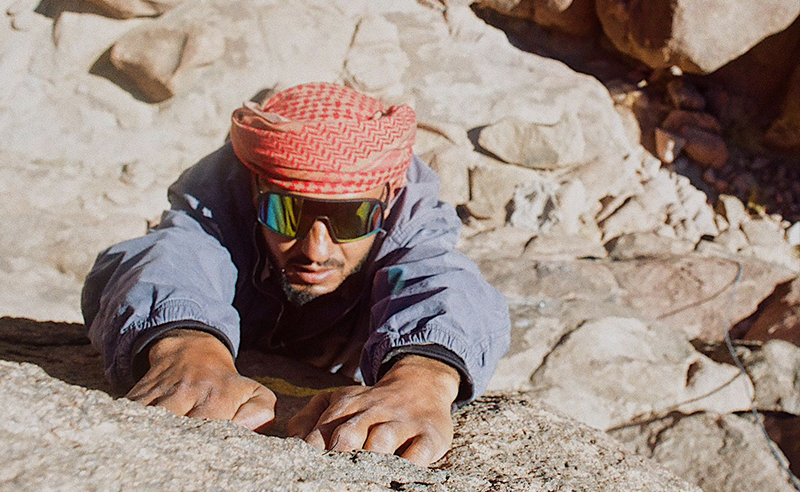 The garments follow this logic. They are utilitarian, but without insistence. A pocket appears where it is needed. The clothes do not attempt to transform the wearer into something else. They assume, instead, that the wearer already possesses a life, and that their role is simply to accompany it.
Through director and photographer Hussein Mardini’s lens, the mountain is indifferent to its own image. ‘Taher’ moves through the frame without alteration, without the slight exaggeration that comes from being watched.
“Tefnut becomes a lens into those lives,” Helali says. “An annual series spotlighting people in the region who live life on the edge as daily reality, not just as an escape or entertainment. This is not about romanticising the extreme,” he adds. “It’s about honouring those for whom it is ordinary.”
 And here, perhaps, is the difficulty. To look without translating too quickly. To recognise that what appears, from a distance, as a life of extremity is, from within, simply a life - complete, sufficient, unexceptional to itself.
Kotn began, as many such projects do, with a modest ambition that concealed a larger inquiry: the perfect t-shirt. A garment so ordinary it risks invisibility, and yet so exacting in its demands - quality, price, the conditions of its making - that it becomes, inevitably, a question of systems. Who grows the cotton? Who weaves it? Who benefits?
Over time, that question has expanded. Kotn is now a certified B Corporation, its work extending beyond the garment into the infrastructures that sustain it - jobs, education, local economies. The language here can sound abstract. But it returns, always, to something material. To fields. To hands. To the continuity of making.
 “We are drawn to stories of endurance, resilience, and freedom from excess,” Helali says, “not because we want to replicate them, but because they awaken something familiar within us.” One might call it recognition. Or memory, though not of a specific past. A memory of proportion. Of what it means to live a life that does not exceed its own needs.
Tefnut does not resolve these questions. It does not attempt to translate one world neatly into another. It lingers, instead, in the space between them. It asks what it might mean to design with attention rather than assertion. To make something that does not impose itself upon a life, but enters it - provisionally - on its own terms. In the shadow of Saint Catherine, cotton - grown, harvested, spun - becomes a garment that does not seek to define that life, but simply to move within it.