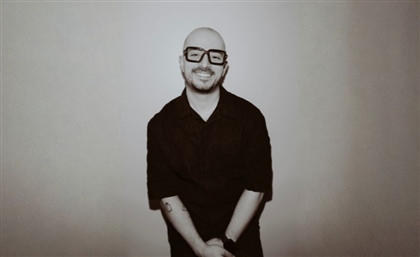
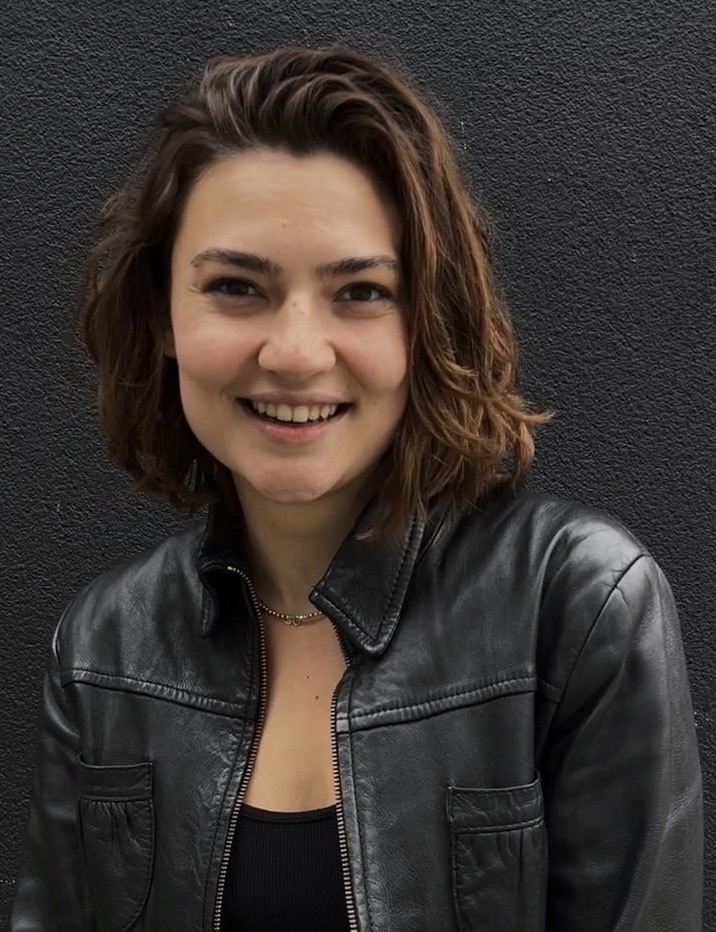
Inside the Ruptured Worlds of Lebanese Creative Eli Rezkallah
Eli Rezkallah reflects on childhood illusion, visual perfection, and the ruptures that shaped his life and work.
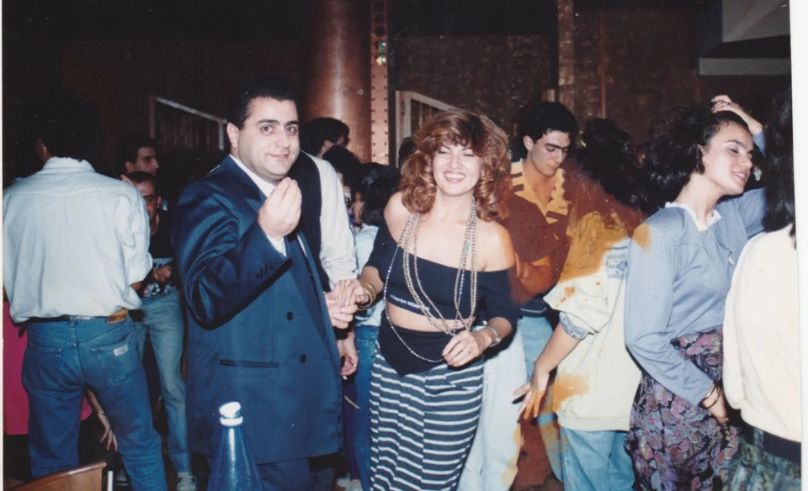
For photographer Eli Rezkallah, childhood unfolded in bright, cinematic fragments at a beachfront resort. There were children playing in chlorinated blue pools, his mother getting ready for the evening, and the hum of adults forever gathering, dressing up, and dancing.
Beyond this frame, the illusion splits open.-e04fc129-0878-4c42-aac0-fc1a2916e535.jpg) As civil war raged in Lebanon, his parents and their circle of friends tried to construct an oasis to flee the war: “They created this kind of parallel life to whatever was happening outside,” he recalls, a protected enclave where celebrations continued, where people were “super dressed and made up,” where beauty itself became a defense mechanism. For baby Eli, this world was simply reality. “For the first few years of our lives, I did not really know what was happening,” he reflects.
As civil war raged in Lebanon, his parents and their circle of friends tried to construct an oasis to flee the war: “They created this kind of parallel life to whatever was happening outside,” he recalls, a protected enclave where celebrations continued, where people were “super dressed and made up,” where beauty itself became a defense mechanism. For baby Eli, this world was simply reality. “For the first few years of our lives, I did not really know what was happening,” he reflects.
It is hard not to see, in that origin story, the blueprint for everything that came after. Rezkallah’s images have moved through perfection: glossy surfaces, choreographed composition, seductive stylization. But look more closely, and the perfection leans into the uncanny. There is often, beneath the lush image, a dystopian current and keen awareness that perfection is itself a system of denial. Through colour and composition, his photographs probe the psychic architecture of fantasy. They unveil the fears and projections that shape the worlds we build in our minds and ultimately how beauty can become a tool to hold collapse at bay.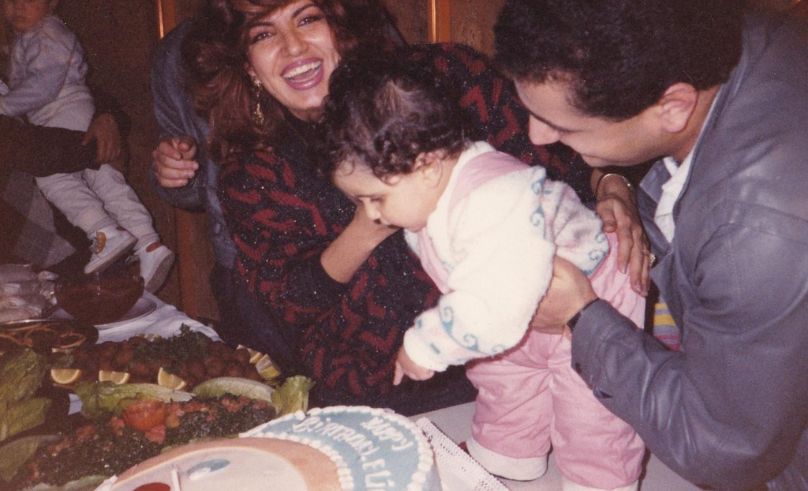 In hindsight, he can see that even as a child amid the parties and stylized normalcy, there was “always a sense of dread in their eyes.” It was the first warning sign. “No matter how much they tried, and no matter how much they succeeded in shielding us physically, they could not control the emotional impact of war on them.” The psychological weight of war always finds a way to seep through.
That tension between the violence unfolding outside and the hyper-stylized world indoors came to shape both his personal sensibility and the visual language of his career. It is also, in many ways, the founding logic of Plastik, the magazine he later founded. “It was a critique to that kind of alternative reality created as a defense mechanism to go on with life when you have no choice but to live it.”
Every utopia, of course, ultimately ruptures. For Rezkallah, the glitch in the matrix came early and violently. He speaks of a moment, remembering a missile strike he witnessed that shattered his protective membrane of childhood. The entire resort had gathered in a shelter underground. Restless, he kept insisting he wanted to go out. An adult finally took him outside, and “three seconds later, there was a missile that hit right next to where we were, and the adult with me got pretty hurt.” It was, he says, “a moment where everything kind of blew up somehow.” And yet, as is so often the case in war, out of necessity things slowly went back to ‘normal.’ Another beach day. Another dinner with the family. That may be one of the cruelest lessons of conflict: catastrophe does not always announce itself as a permanent break. Sometimes it is absorbed into routine. One day you descend underground; the next day you continue.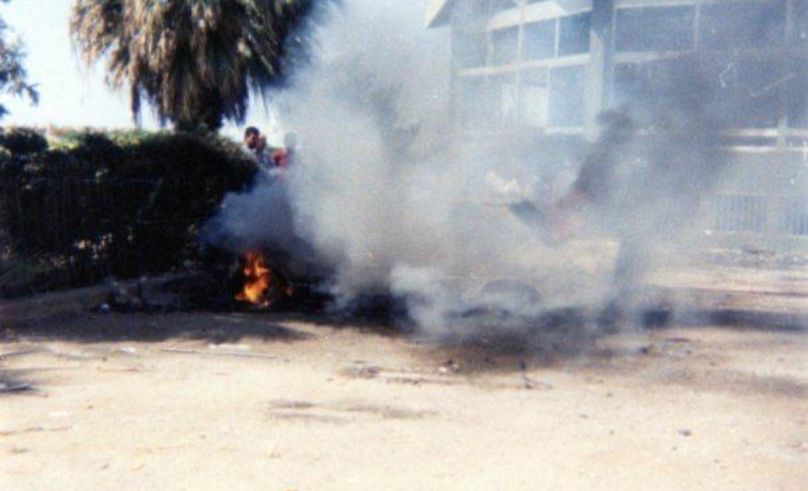 Reflecting on the past, Rezkallah now thinks of his life in phases, each one marked by a collapse of one imagined future and the difficult invention of another. Through each chapter, “there are levels of awareness, and trials and errors that bring you to certain realizations, but there is also helplessness” that shadows every chapter. Growing up in places like Lebanon, shaped by generational war, survival is cruelly paradoxical. “No matter how much you try to shield yourself from war, you can never escape it. It will find you one way or another.” Even resilience becomes a burdened act: necessary, painful, and haunted by a damned-if-you-do, damned-if-you-don’t reality.
Childhood was phase one: magical, stylized, but tainted by violence and the emotional understanding that horror exists just beyond the frame.
Phase two began in the contradictory years when Lebanon seemed, briefly, to be moving forward, even as targeted bombings, assassinations, and internal conflicts persisted. This marked the beginning of his career, and perhaps unsurprisingly, it came about through denial. “I kind of ignored everything happening around me and kept going,” he says. Still a teenager, he had an urgent need to prove himself and to insist on possibility.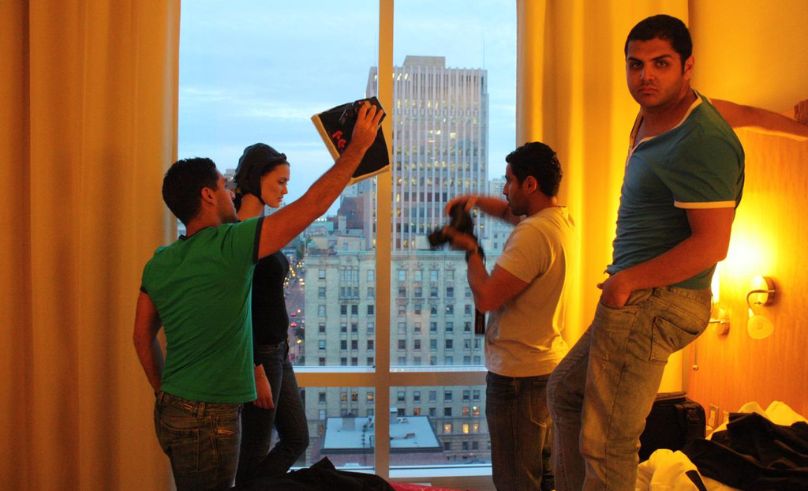 His first major project was a Valentine’s Day event he worked on, hoping to show his parents that he was capable of more than his age suggested. But on the day of the event, Rafik Hariri was assassinated, and it had to be abruptly cancelled. Even at the threshold of ambition, history intervened. The image of a career beginning under the sign of a cancelled event, a broken civic horizon, and a refusal to stop feels almost too perfect as a metaphor. But Rezkallah kept going. He launched Plastik. He built a visual language. He made a world.
That persistence, he says later, is one of his defining traits. Looking back, he would tell his younger self that one of his strongest attributes was “how stubborn, consistent, and disillusioned about the outcome [he was],” because that refusal to dwell on feasibility is precisely what allowed him to build a career. “If I had stopped and thought about the outcome and whether something is possible or not,” he reflects, “I wouldn’t have done this at all.” Youth, in his telling, holds a radical gift: excitement unburdened by caution.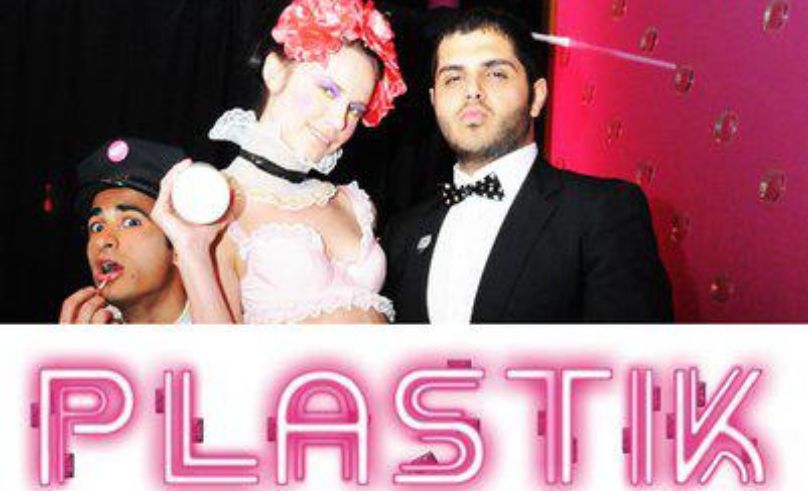 This impulse to keep creating became his form of resistance, a refusal “to let them win by stopping us from pursuing what we came into this life to do.” A message he proudly believes in today. However, Rezkallah is careful not to flatten this persistence into a simple, heroic narrative. “At that age, I was not yet politically formed,” he reflects. “So much of what I understood then was shaped by circumstance and others around me, rather than by my own processed experience.”
If phase two was denial harnessed as creative propulsion, phase three was rupture in its most literal form: the 2020 Beirut port blast. By then, Rezkallah had spent more than a decade building Plastik, shaping its identity and its reach. But the explosion forced a reckoning that his childhood had not. “I had an immediate reaction, and almost like a total refusal to repeat what my parents did,” he says. He remembers turning to his mother that night and asking, “How could you experience this and keep us here?” Then came the decision: “I need to leave. I looked at every object that I had [in my apartment], and I thought, I don't need it. I just left with my passport. It fully shifted the way I am now attached to spaces.”-0cd7fe90-5ad6-4fe1-85ae-0bb79cc953b1.jpg) That departure was far more than geographical. To leave Beirut was to sever himself from the cycle that had shaped his family’s life and his own imagination. It meant choosing survival differently, refusing the old equation in which catastrophe is normalized, and beauty is made to contain it. But it was also devastating. “I believed leaving was the solution, but in hindsight, neither staying nor leaving is the perfect answer. It was simply the best I could do at the time. Like so much else in war, it was circumstantial. A lose - lose situation.”
That departure was far more than geographical. To leave Beirut was to sever himself from the cycle that had shaped his family’s life and his own imagination. It meant choosing survival differently, refusing the old equation in which catastrophe is normalized, and beauty is made to contain it. But it was also devastating. “I believed leaving was the solution, but in hindsight, neither staying nor leaving is the perfect answer. It was simply the best I could do at the time. Like so much else in war, it was circumstantial. A lose - lose situation.”
Choosing to “leave everything behind,” Rezkallah entered another stage altogether in New York – one defined by displacement, reinvention, and eventually, political reawakening. He describes the city as a place that “destroyed my ego in the best way possible.” After years of going “nonstop, not thinking,” New York created the conditions to stop and reflect. It made room, he says, for the person behind the career to reappear.-efcbefa5-24b1-4192-9df1-b0d025644a95.jpg) It also gave him a front-row seat to yet another illusion-breaking. After Gaza, he describes experiencing “the decolonization of [his] soul and mind.” He left for the United States, he says, as a liberal shaped by the familiar frameworks of human rights and democracy. Gaza exposed the conditionality beneath them. “I realized that all the conversations that we’ve had for the past five years and all the teachings that we were trying to spread, they apply to everything except one subject.” Once seen, that hypocrisy could not be unseen.
It also gave him a front-row seat to yet another illusion-breaking. After Gaza, he describes experiencing “the decolonization of [his] soul and mind.” He left for the United States, he says, as a liberal shaped by the familiar frameworks of human rights and democracy. Gaza exposed the conditionality beneath them. “I realized that all the conversations that we’ve had for the past five years and all the teachings that we were trying to spread, they apply to everything except one subject.” Once seen, that hypocrisy could not be unseen.
That recognition has reshaped the way he thinks about culture, publishing, and the region. For Rezkallah, decolonisation is not just a philosophical stance but a practical imperative, especially within media. The magazine industry in the MENA region, he argues, remains deeply “colonised by foreign titles,” leaving too little space for homegrown publications to define their own sensibilities and priorities. This, he suggests, is precisely why the current moment matters: it offers an opportunity to build platforms in the region “that are not colonised by the West,” to create spaces where local voices are not filtered through imported systems of validation, funding, or aesthetics.
As an artist, he approaches this moment with care. He is clear-eyed about the limits of his own position – neither fully removed from the violence nor entitled to speak over those more directly within it. And yet he rejects silence. At a major art fair in New York last year, amongst more than 2,000 artists, he was struck by the absence of any meaningful response to the genocide in Gaza. The emptiness of that spectacle clarified something for him. “My form of resistance is continuity and consistency,” he says. Just as important is discernment: choosing “very carefully who I give a voice to, who I give a platform to, who I collaborate with.”
That ethic of continuity mirrors the shifts he has observed in media itself. If one major transformation in his career was the move from print to digital, another now is underway: from social media to AI. Plastik was early to understand the power of digital circulation, especially as a non-profit publication without the infrastructure or capital that was required for print distribution. Social media gave the magazine enormous reach, especially in the United States. But that era, he believes, is ending. Visual culture is already oversaturated; AI will only intensify that condition. The future, as he sees it, lies in the tangible: live experiences, theater, physical objects, stories rooted in actual presence.-a87c7922-e883-4d09-84f5-8e4d8d8417e3.jpg) Across Beirut, New York, and Dubai, Rezkallah now seems to stand on the edge of another beginning. He speaks of an expansion in the region, of building something that champions local talent on a larger scale. The direction is forward, but not naïve. He knows too much now about illusion to believe in seamless narratives.
Across Beirut, New York, and Dubai, Rezkallah now seems to stand on the edge of another beginning. He speaks of an expansion in the region, of building something that champions local talent on a larger scale. The direction is forward, but not naïve. He knows too much now about illusion to believe in seamless narratives.
Particularly now, as he stands on the threshold of this new chapter, war has erupted once again. As he shares, “what is happening now will continue to shape me and shape my thinking. There will be many more chapters ahead. Change is the only constant in this journey, and what we are experiencing now will inevitably shape what comes next.”
And perhaps that is the deeper meaning of utopia in Eli Rezkallah’s life and work. Not perfection. Not escape. But the fragile, stubborn human instinct to construct beauty anyway – even knowing it may crack. Over and over, his life has been shaped by the collapse of one reality and the difficult assembly of another. Home itself has shifted from place to body, from apartment to atmosphere, from permanence to presence. “I think I learned that home is me and my body and the small moments with loved ones,” he says.
Looking ahead, what he wants from this new phase is to gather everything he has learned – the commercial and the artistic, the visual instinct and the political awakening, the heartbreak and the endurance – and “to create with empathy, abundance, love and joy.” If there is a thread running through all these chapters, “it is not the glorified, and at times, crippling idea of resilience,” he reflects. “It is the reality of survival. It takes different forms at different moments, but at its core, it must remain rooted in a shared humanity.”
- Previous Article The SceneStyled Wedding Season Edit
- Next Article Celebrity Journalist Raya Abirached Dives Into her Styled Archives