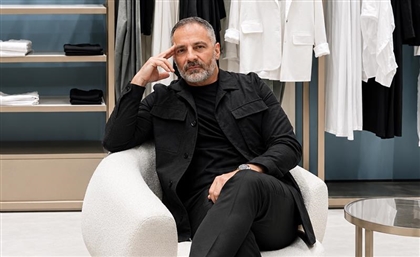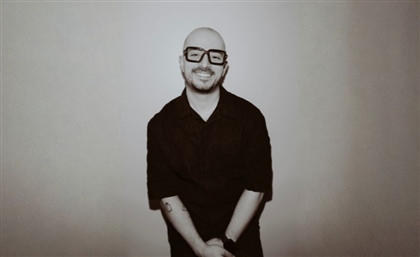
Egyptian Director Bassem Eldabour Start From Borrowed Cameras to Dior
Egyptian creative Bassem Eldabour shares an unfiltered look at fashion film, burnout, and the business of navigating the Middle East’s creative industry.
“I started shooting with a very, very small camera to capture landscape photos. I wanted to be a photographer. Then I stopped because I found that I'm not going anywhere.”
For Egyptian director and producer Bassem Eldabour his career path was a string of chance encounters, borrowed cameras, late-night messages and the kind of stubborn momentum that defines so many creative careers in the region.
“During COVID I kept sending messages to everyone I know. Then I got a message at like 2AM that someone was shooting a music video and asked me to come shoot BTS.” At that time, he didn’t own a camera, so he borrowed one from a friend and went. The next day, someone on set recommended him for another job. “I shot it and it kept going like this. I got like many, many shoots to do BTS on set.”
At the time, Eldabour was still studying Fine Arts, working in graphic design, and trying to piece together enough money to buy his own equipment. Eventually, he convinced his manager to help him buy a Sony S7R2 in installments. For months, though, he had the camera but no lens. “No one believed in this story, so no one helped. Then my boss bought the lens for me again.”-43fb9c85-6713-43c1-8211-52a25a9cd939.jpg) By 2019, Eldabour began assisting photographer Amr Yazildin, a figure he describes as central to his formation. “Amr pushed me a lot. He taught me everything. He pushed me in the market.” Working with Amr while taking on small production jobs, hotel shoots and BTS work, he began moving between roles before he could fully define what he wanted to be. “Before that, I was like, I don't know what I want to do. Do I want to do production? Do I want to do videography?”
By 2019, Eldabour began assisting photographer Amr Yazildin, a figure he describes as central to his formation. “Amr pushed me a lot. He taught me everything. He pushed me in the market.” Working with Amr while taking on small production jobs, hotel shoots and BTS work, he began moving between roles before he could fully define what he wanted to be. “Before that, I was like, I don't know what I want to do. Do I want to do production? Do I want to do videography?”
The shift came unexpectedly on a fashion shoot in Fayoum, when a friend asked him to take over the video. “After this shoot, everything changed.” Fashion videography, however, was never the dream. “No, it just happened. I never wanted it per se." What drove him, at least at first, was more instinctive. “I was working just for working, like escaping the world. But then I fell in love with it.”
Still, video gave him something photography didn’t. “I hated photography, because I feel like there is no soul in it,” he says. “So I wanted to do videography. This is where I feel like I'm doing something different.” Yet even as work grew, self-doubt followed. “I always felt that I am not good enough.” That tension eventually pushed him into production, which he first approached pragmatically. “I found that I'm doing videography for myself, but I'm doing production for money.” Over time, the work became its own kind of discipline.
By the end of 2021, he took his first exploratory trip to Dubai. “I didn't like it at all. Like for me, it was so artificial. I didn't like it. I don't feel anything there.” Still, a job brought him back, then another shoot, then another connection. Slowly, he began moving between Cairo and Dubai, hopping through set design, production and videography. “I was doing my best to just survive at this time because I didn't know what to do. But I wanted to keep pushing to see what was going to happen.
Now, after years of assisting, producing, shooting, managing and rebuilding, he describes his path as anything but linear. But beneath that timeline is a career built on persistence— one that started with a borrowed camera and kept moving because stopping was never really an option. Having worn nearly every hat on set, burned out, stepped away, returned, and questioned the industry more than once, he speaks from the lived experience of someone who knows exactly where the pressure points are and what can be better.-b0cc72e6-7cba-41df-b6ef-6810762a0c8e.jpg) Q: Is social media actually important globally?
Q: Is social media actually important globally?
“Creatives have to be influencers in the Middle East. Globally, many of the best producers and photographers don’t even have social media. They have an Instagram account they stopped posting on years ago. It’s not really about social media at all. But in the Middle East, it is, because we don’t have the same industry infrastructure to build a reputation through. In Hollywood, people know you from film school, or because someone gave you a chance and you proved yourself, so you keep working. In Egypt and across the Middle East, that industry structure doesn’t really exist.”
Q: What does the industry understand in Dubai but not in Egypt?
“In Egypt, they are waiting for you to do everything—to shoot, to direct, to edit, to color. Filmmakers know how to color and how to edit, but not as a colorist, not as an editor. You need many talents on set to make that image come to life.”
Q: What visual reference needs to die?
“The ahwa photo definitely has to be done. I think it’s part of our culture. Younger people see the photographers they admire in Egypt doing it, so they want to do it too. Those are the references they have right now. The easiest thing to shoot is someone sitting on the street, having shisha. It’s the easiest photo to take.”
Q: Is Egypt still copying Western references?
“I think Egypt is getting more educated about this part. They are trying to find themselves and to find their culture and try to put it in the images more than ever. But in Dubai, no. it's all about the Western campaigns.
Q: What actually gets you booked in the Middle East?
“It's not about talent at all. It's about how you are nice to people, how you are nice on set, your mood on set, your smartness in dealing with the client, with the people around you.”
Q: What’s the mental-health breaking point in the industry?
“I think everything needs to change. They over-expect from you. They want you to lead everything on set. They want you to lead the creative, they want you to lead the edit. You come for a shoot with like 200K, they give you 100K and wait for everything to be done. It's not like that. Also the shooting days, everyone knows that the minimum for many shoots in Egypt is 16 hours, 18 hours. It's normal to shoot 24 hours. This is very exhausting.”
- Previous Article Monochrome Monday: The Mellow Edition
- Next Article Celebrity Journalist Raya Abirached Dives Into her Styled Archives