The Story of Braids in Egypt From Plaited Past to Present Tense
Tracing braiding from Ancient Egypt to today, SceneStyle explores hair as heritage and an evolving form of expression.

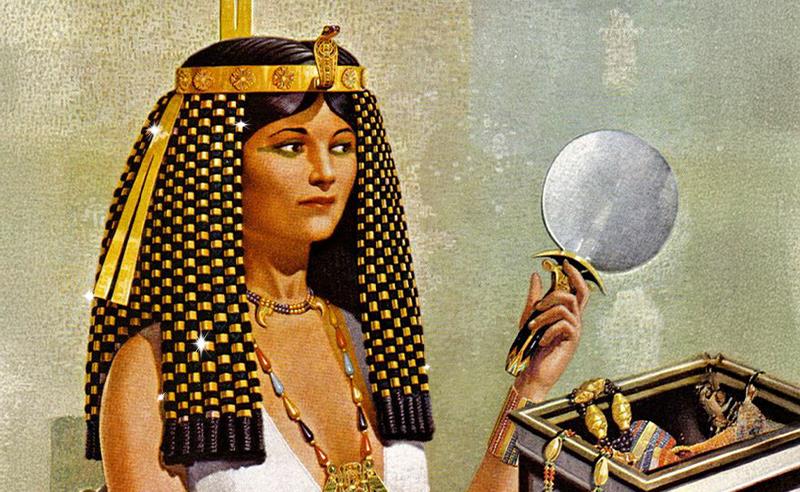
Across the African continent, hair braiding has long been a language of beauty, identity, and belonging. Its roots also reach back to Ancient Egypt, where hair carried deep social, cultural, and symbolic weight. A limestone bust of Queen Nefertiti reveals an intricately styled coiffure, while the coffin of Princess Kawit suggests that braided wigs were once worn with the authority of crowns. The earliest known example of hair extensions, dating back to around 3400 BC, was discovered in a female burial at Hierakonpolis. Attached to natural hair, and later crafted into full wigs made from human hair, wool, and plant fibres, these styles were both ornate and practical, protecting shaven heads from the sun and lice, while marking status and beauty.
But much more than practicalities and social standing, hair itself was believed to hold a kind of vitality. It could protect children and the deceased, serve in rituals, and act as a conduit of power over others. The language reflects this reverence—hieroglyphs include multiple distinct terms for different types of locks and braids, each carrying its own meaning.
Braiding did not disappear with the ancient world. Centuries later, the style continued to surface across Egypt. In Braids for Paradise: From Dynastic Egypt to the Islamic Middle Ages (2007), scholar Maya Müller traces this continuity through a female burial at the Byzantine-Islamic cemetery of Durunka, near Asyut. Dating to the Fatimid period (11th/12th century), the burial contained a hairpiece formed from two long braids, suggesting that while women did keep their hair covered in public in much of Medieval Egypt, there is evidence that they often styled their hair beneath them in braids. Braided hairstyles were also referenced in many medieval texts such as poetry and legal texts particularly the highly-admired ʿAqīṣa style.
By the 19th century, that vocabulary remained visible in everyday dress. Writing in Egypt between 1833 and 1835, in his book An Account of the Manners and Customs of the Modern Egyptians, Edward William Lane described women wearing their hair in an uneven number of braids (typically between eleven and twenty-five) falling down the back. Black silk cords would be woven into each plait and finished with gold ornaments known as ṣafa.
Today, this legacy continues. “Throughout history people have braided to protect their hair from damage,” says Ayaa Khaled, founder of Cairo-based braiding brand Dafayer. “Women today in Egypt still braid their hair to protect it from heat, humidity or damage. Some also do it to take a break from styling their hair.”
Khaled’s own journey into braiding began at home, learning from her mother before developing her skills into a business. What started as personal experimentation grew into a response to a gap in the market—accessible, quick braiding styles using extensions. Since launching Dafayer in 2016, she has worked across hair types and textures, refining her understanding of the craft through hands-on practice.
In recent years, braiding in Egypt has also found new visibility through global conversations around natural hair and protective styling. “Braids started to go viral in Egypt during Covid time,” Khaled notes. “Around that time people started their heat-free journey and braiding became a huge part of it.” As more people moved away from heat styling, braids became both a practical solution and a beauty trend.
Yet, as with many cultural practices, braiding exists within ongoing debates around ownership. This history of braids in Egypt complicates a contemporary accusation Khaled often encounters: that Egyptian women wearing braids are simply “copying Americans” or "appropriating black culture.” The claim overlooks the long presence of braiding within Egypt itself, reducing a practice with its own local history to something imported from elsewhere. At the same time, in a country where colourism continues to shape how beauty and identity are perceived, questions around who wears certain styles can carry their own tensions. Khaled’s position, however, is expansive: “Anyone can have braids! For me, it’s less about ‘who’ and more about what suits you.” Rather than policing ownership, her focus is on hair type and the individual wearing the style.
For younger generations discovering braids through social media, Khaled hopes the conversation goes deeper than simply aesthetics. “It’s not just a hairstyle, it’s a form of art that comes with lots of small details and hard work,” she says. “At the end of the day, our hair is also a form of identity and expression.”
Between ancient rituals, medieval texts, and contemporary salons, braiding in Egypt exists in a space that is both rooted and fluid. It carries echoes of the past—of protection, symbolism, and craft—while adapting to the rhythms of modern life.
- Previous Article KOTN Taps Alana Hadid & More for ‘Nothing to Declare’ FW Campaign